
Graduate students who move to new places for higher education find it challenging to make themselves feel at home.
Graduate students:
These constraints make homemaking in a new place more challenging for this group. Though graduate students are a distinct target group, they embody characteristics that are seen within the greater population:
Thus, designing for graduate students can also help us reimage home for a broader population.
We conducted research to understand:
What does home mean to graduate students?
What are some challenges in making their new place feel like a home?
We conducted 1-hour semi-structured interviews and a 3-day diary study with 6 University of Washington Graduate Students; I led 2 of these 6 interviews.
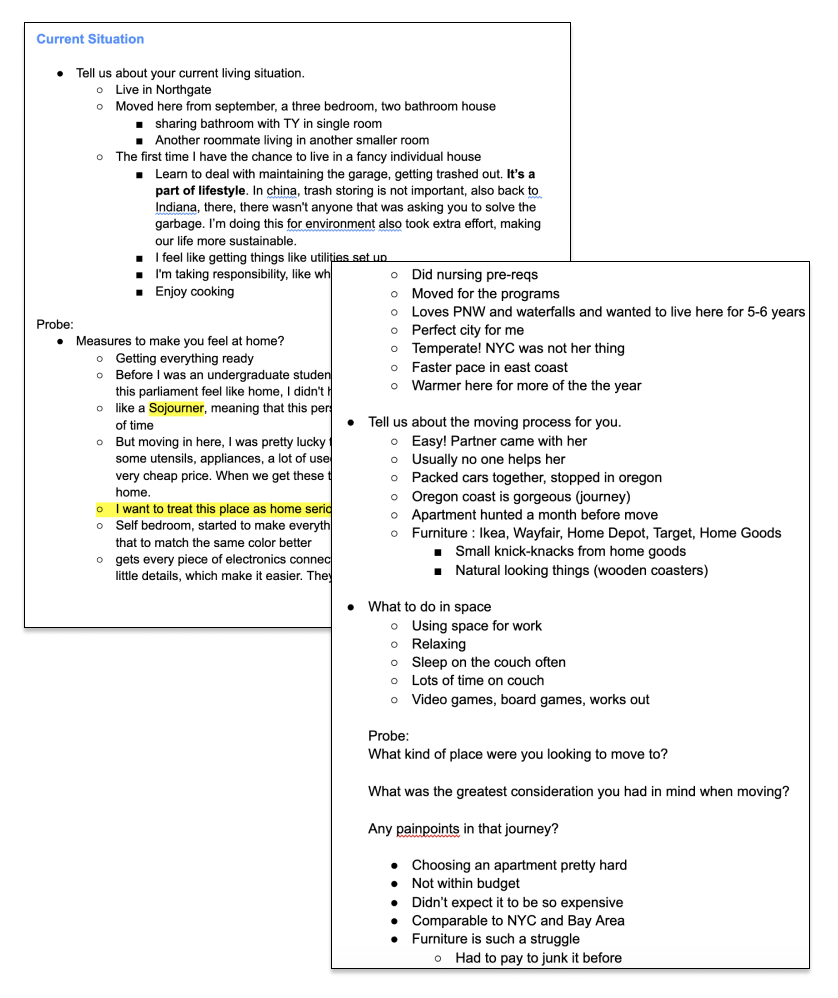
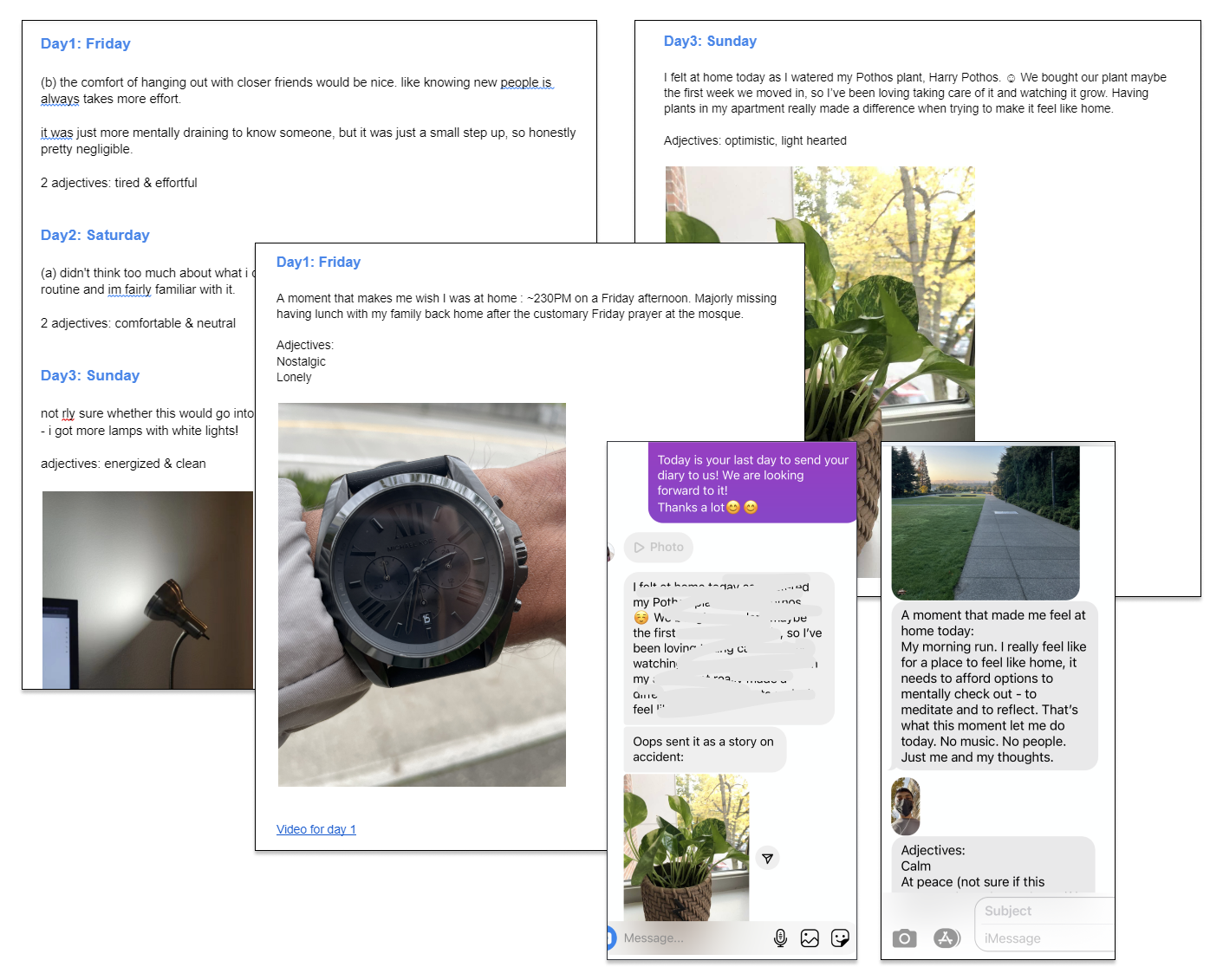
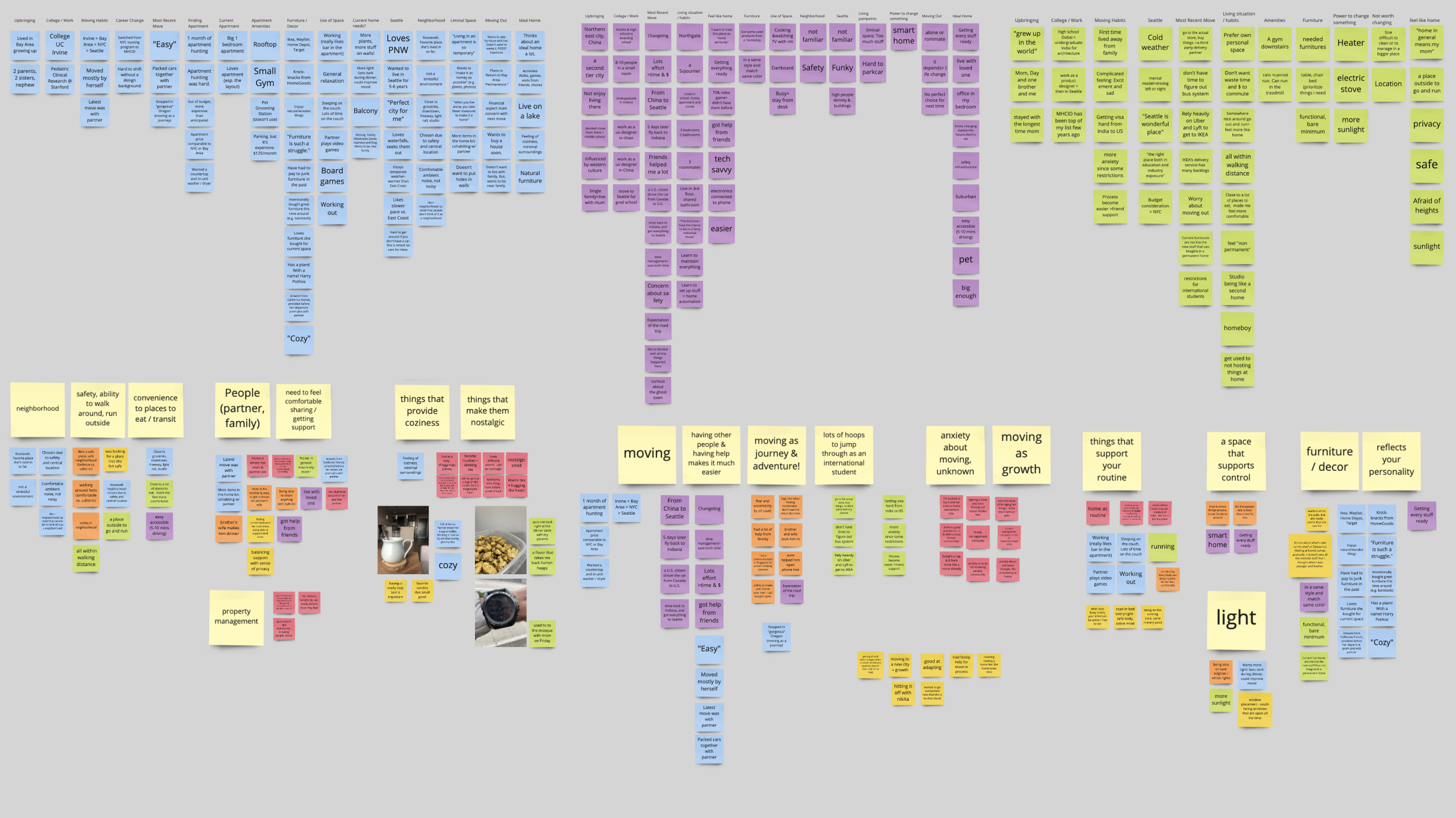
We extracted data from each interview, grouped participant data based on common repeating themes on Miro, and arrived at 4 insights, which we then combined into 2 main insights to guide our ideation direction.
They miss the sense of home they get from:
-talking with their loved ones
-caring for each other through small actions
-enjoying each other’s presence.
“230PM on a Friday afternoon. Majorly missing having lunch with my family back home after the customary Friday prayer at the mosque” -P1
To feel more connected to their loved ones in their home:
-people text or call friends and family
-recreate smells and tastes of home
-put up photos and mementos in their space
But there are still moments where they feel the absence of those they left behind.
"I have photos of my nephew on my fridge because I miss him. He’s only 8 months old, so it’s been kind of tough and sad to miss all those big milestones" - P2
Our initial desk-research driven hypothesis assumed that physical objects are important in making a place feel like home. However, after user research and analysis, we found that people’s friends & family are important in making a place feel like home.
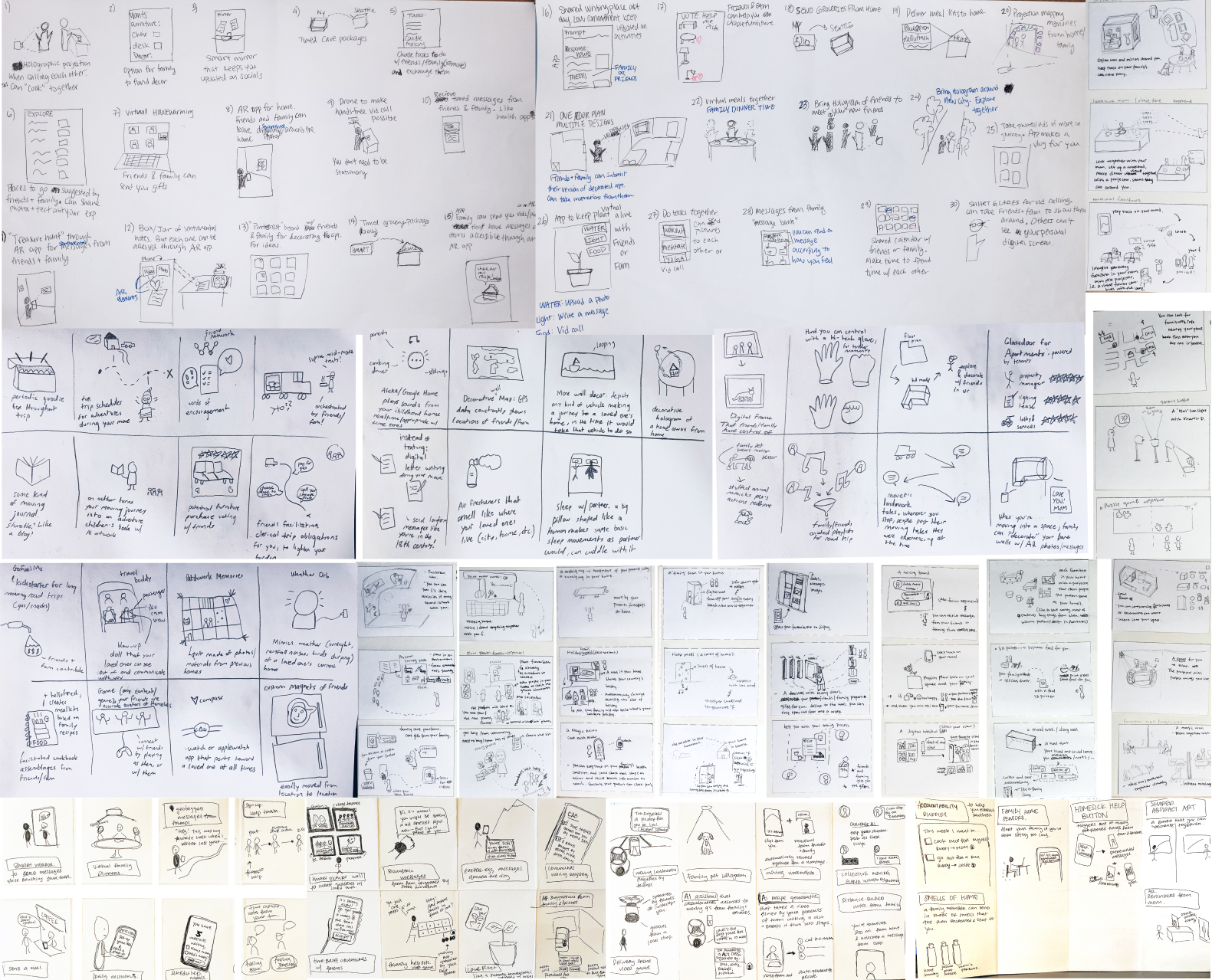
Using the insights gained from our user research, I ideated 30 potential design solutions to come up with a team total of 120 ideas. We then transferred our ideas into Miro to affinitize and dot vote on our favorite ideas.
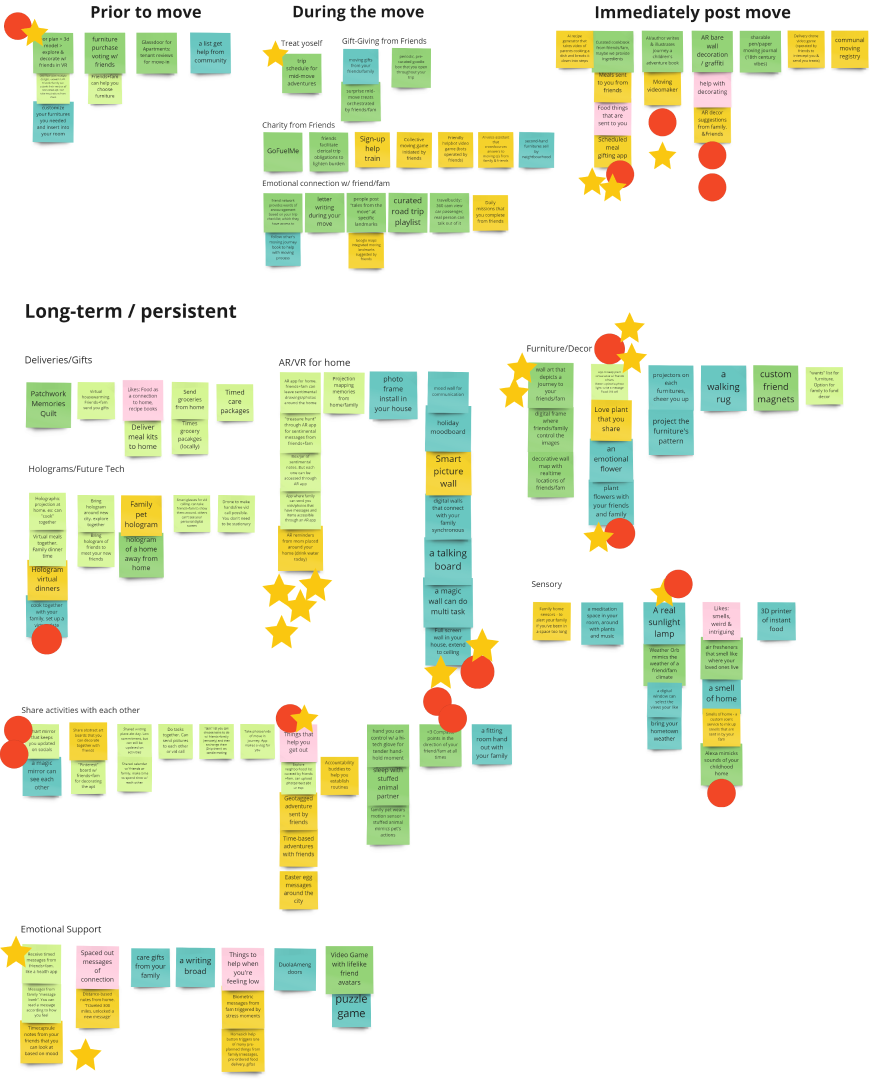
After an initial dot voting session, we had 7 main clusters of ideas and found that we were drawn to ideas that fell in the later stages of the moving process - when students need more emotional support.
To narrow down even more, we came up with 3 design prioritizations,
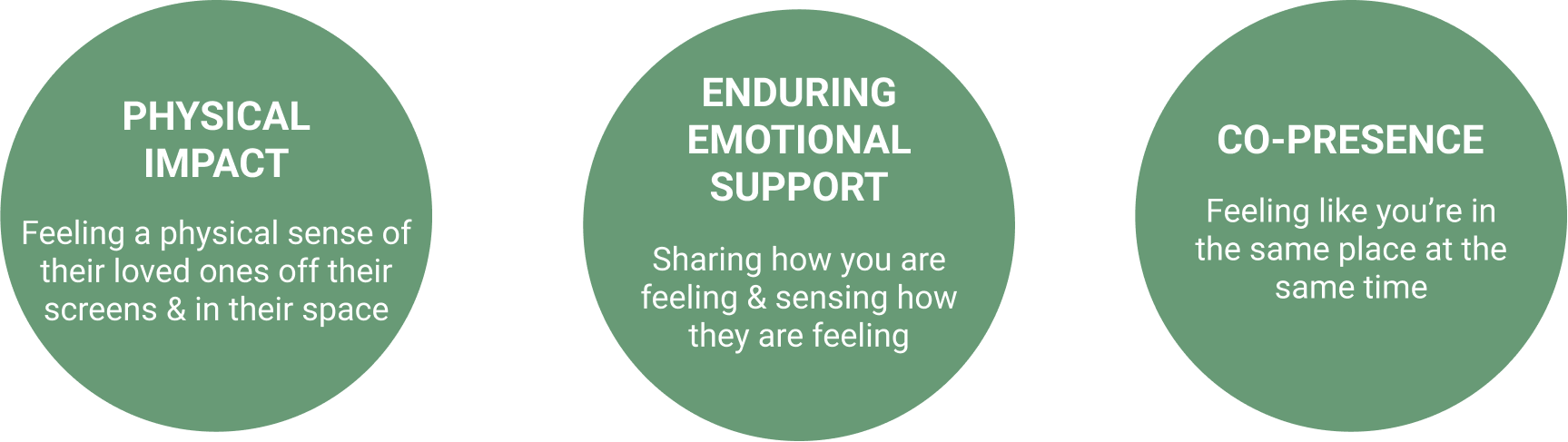
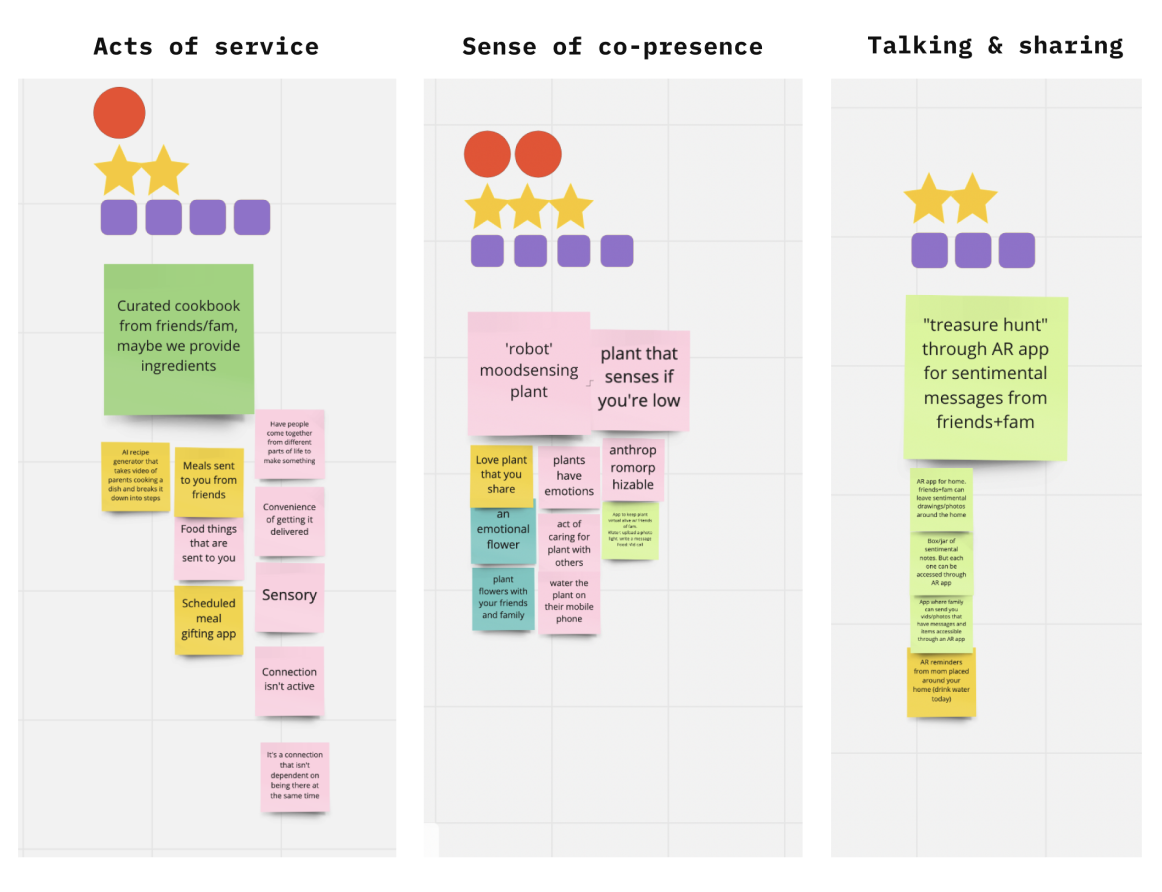
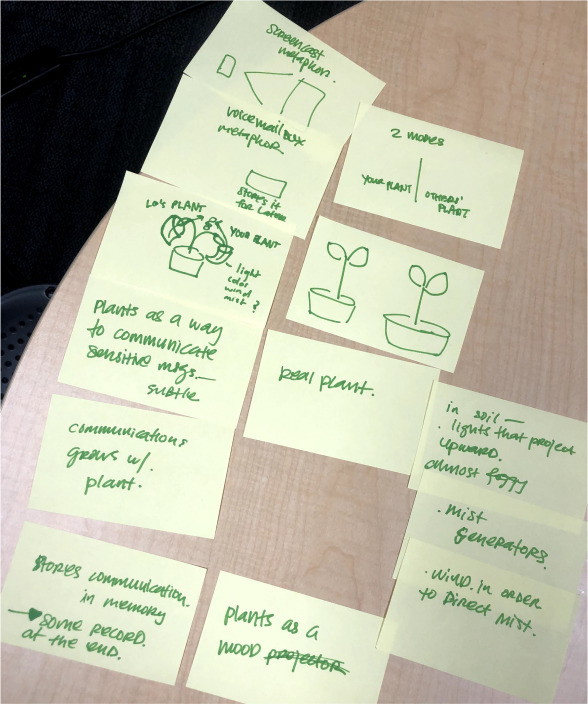
Through storyboarding and reviewing the concepts in more detail, we arrived at an unanimous decision: the plant-oriented solution.
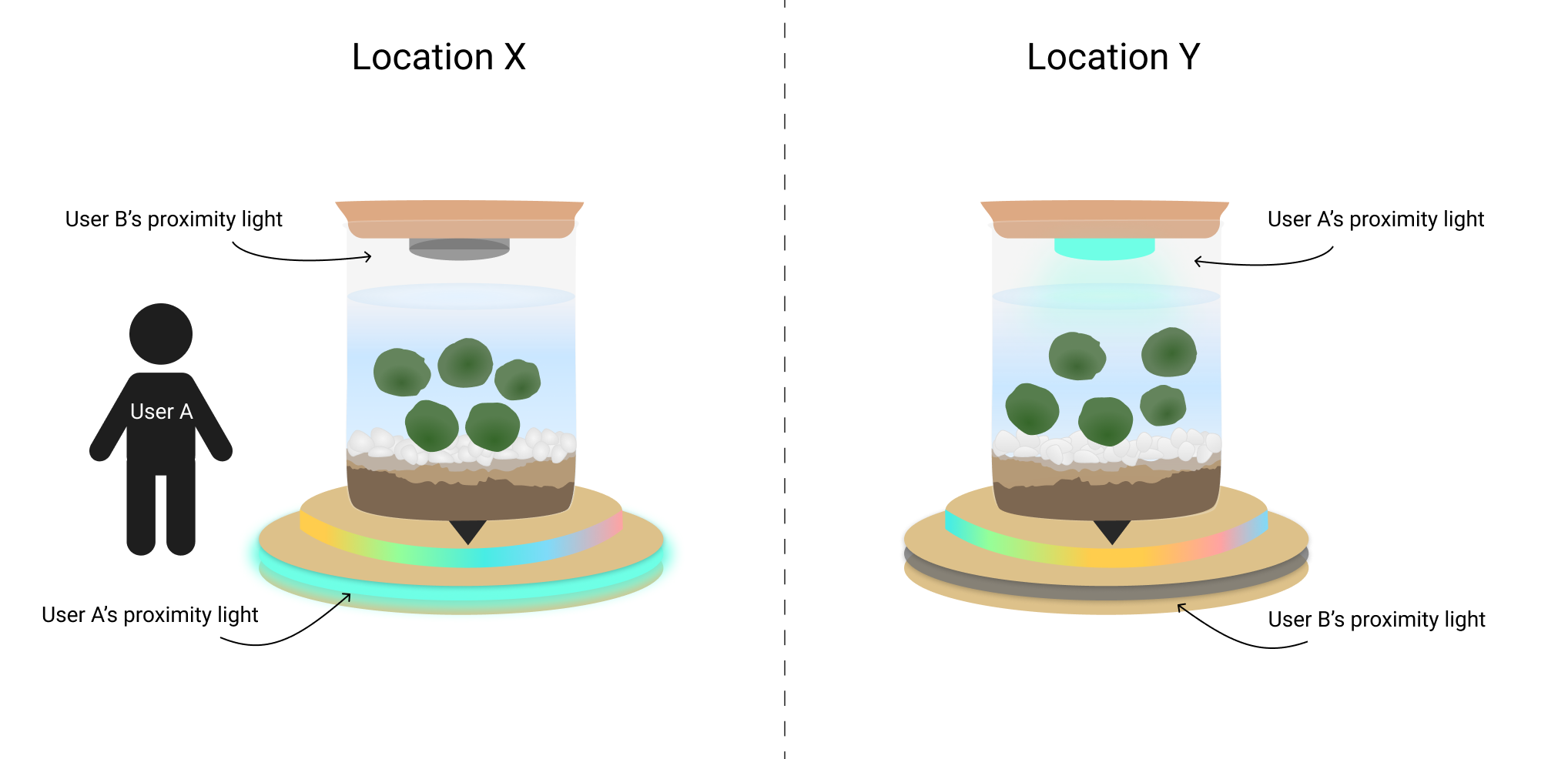
We felt that plants offered a natural integration with one’s space to create a sense of subtle co-presence in addition to using it as a communication device.
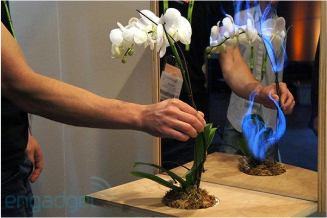
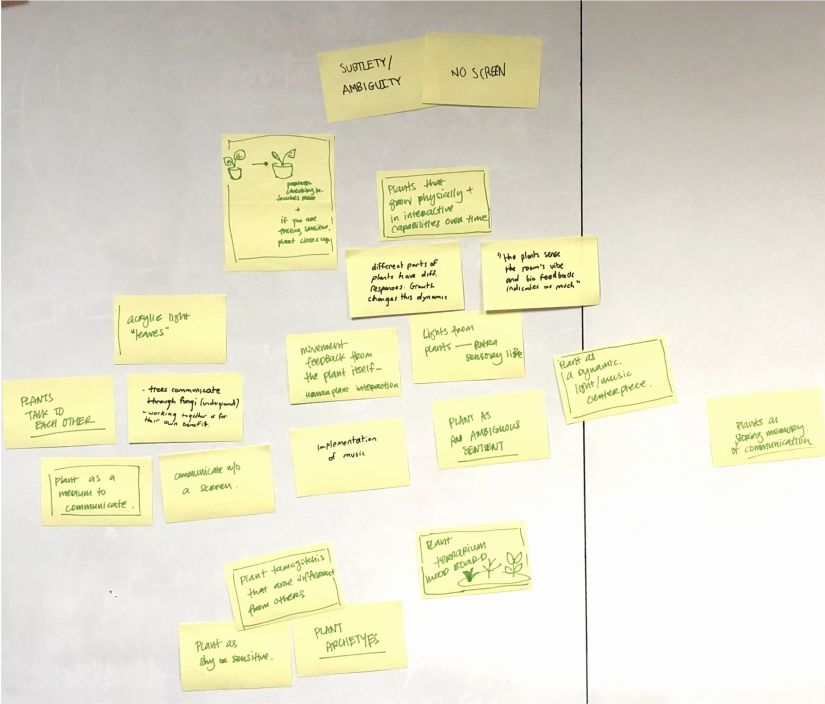
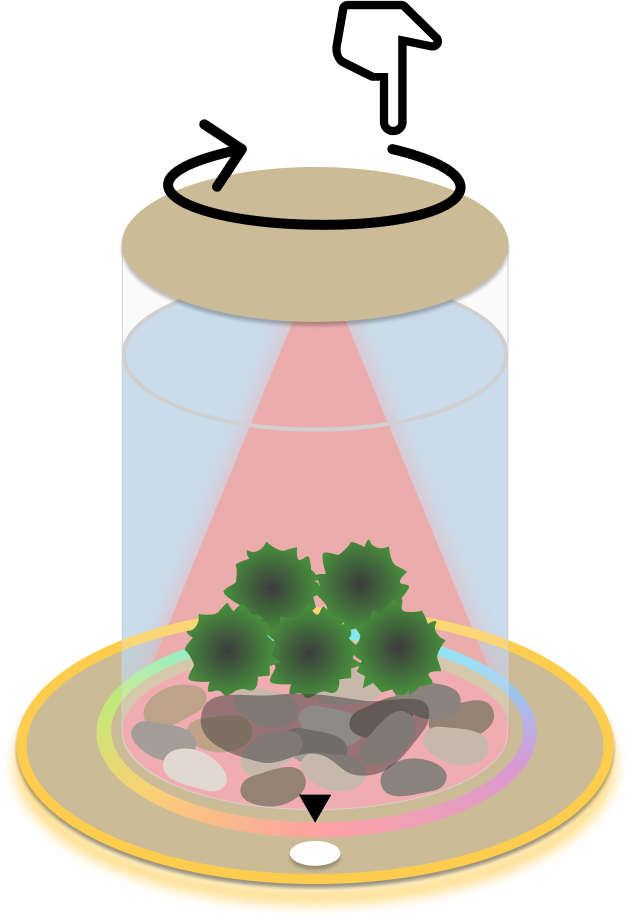
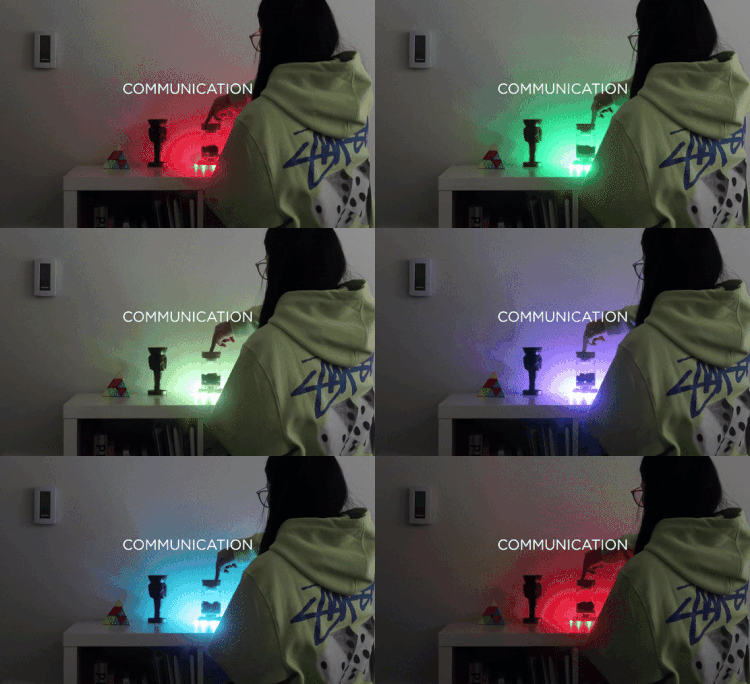
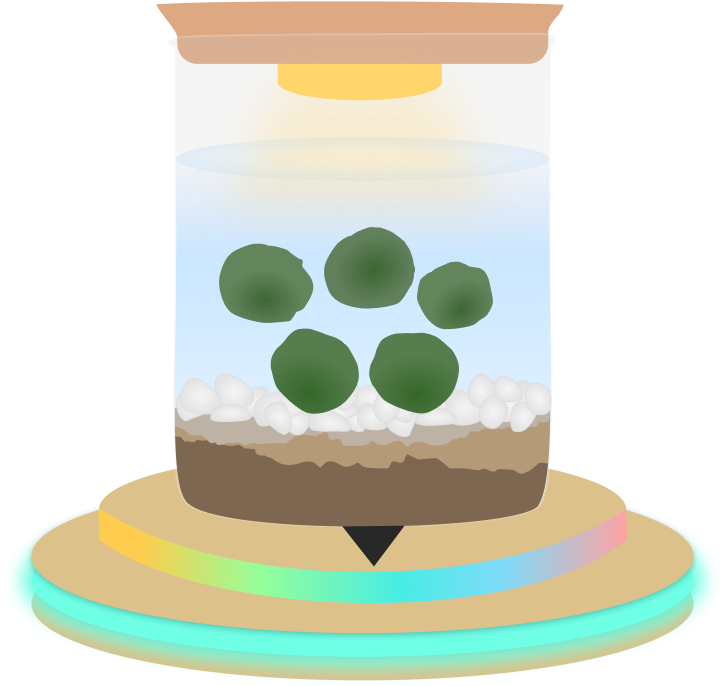
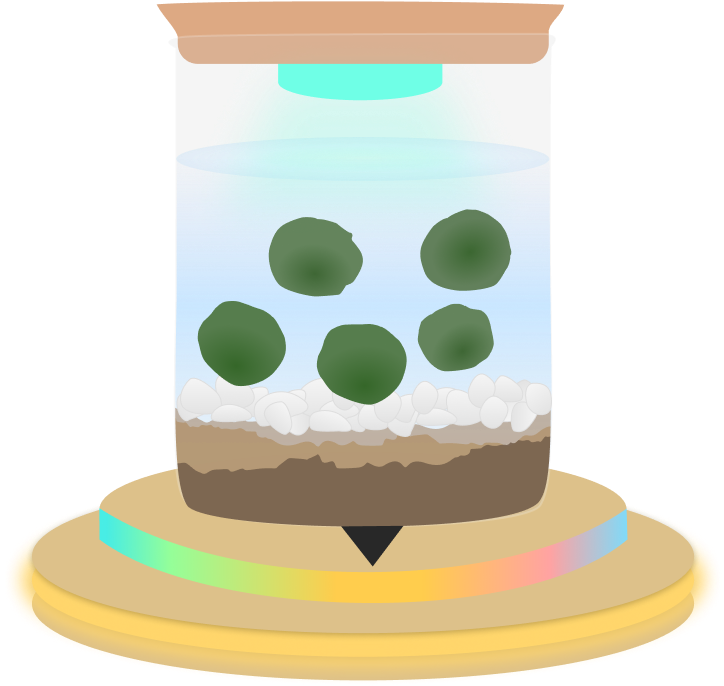
A user can touch their plant in different ways that represent different messages they want to send to their loved one’s plant. This input from the user’s plant would be outputted from their loved one’s plant as a subtle message in the form of color and sound.
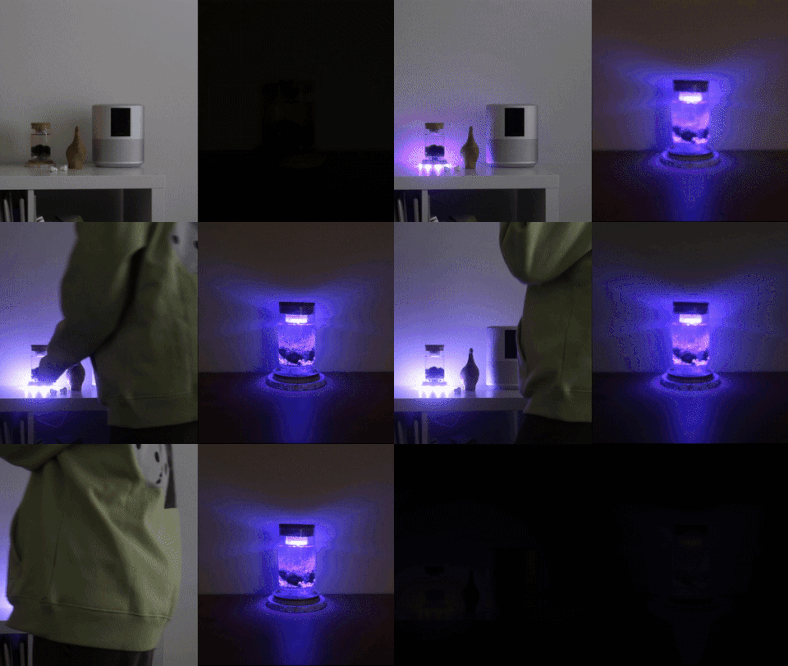
To gain a deeper understanding on how users might use our design concept, each of us created a wizard-of-oz prototype for one key path of our concept and tested it with 5 different users, for a total of 20 users.
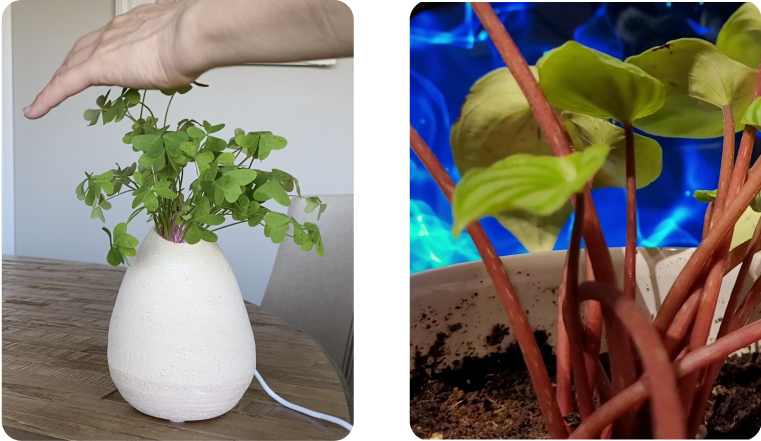
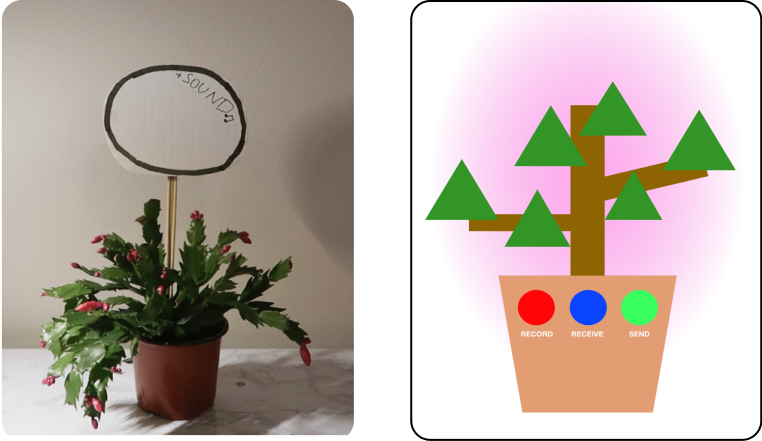
We wanted to know:
We wanted to explore:
"I’m not sure which part I can touch...maybe there are thorns on it... or I would destroy the leaves and flowers.” -P1
“This plant would represent my partner and my relationship, if it starts wilting, that might be a sign about our relationship.” -P2
“Adding buttons on it... it’s too technological, like a digital device...and it feels weird to say “hey, plant.” -P5
“...pop-up notification is not necessary... notifications filter unwanted messages...if the message is from my loved ones, I wouldn’t need to filter it, I'd take it in real-time.” -P6
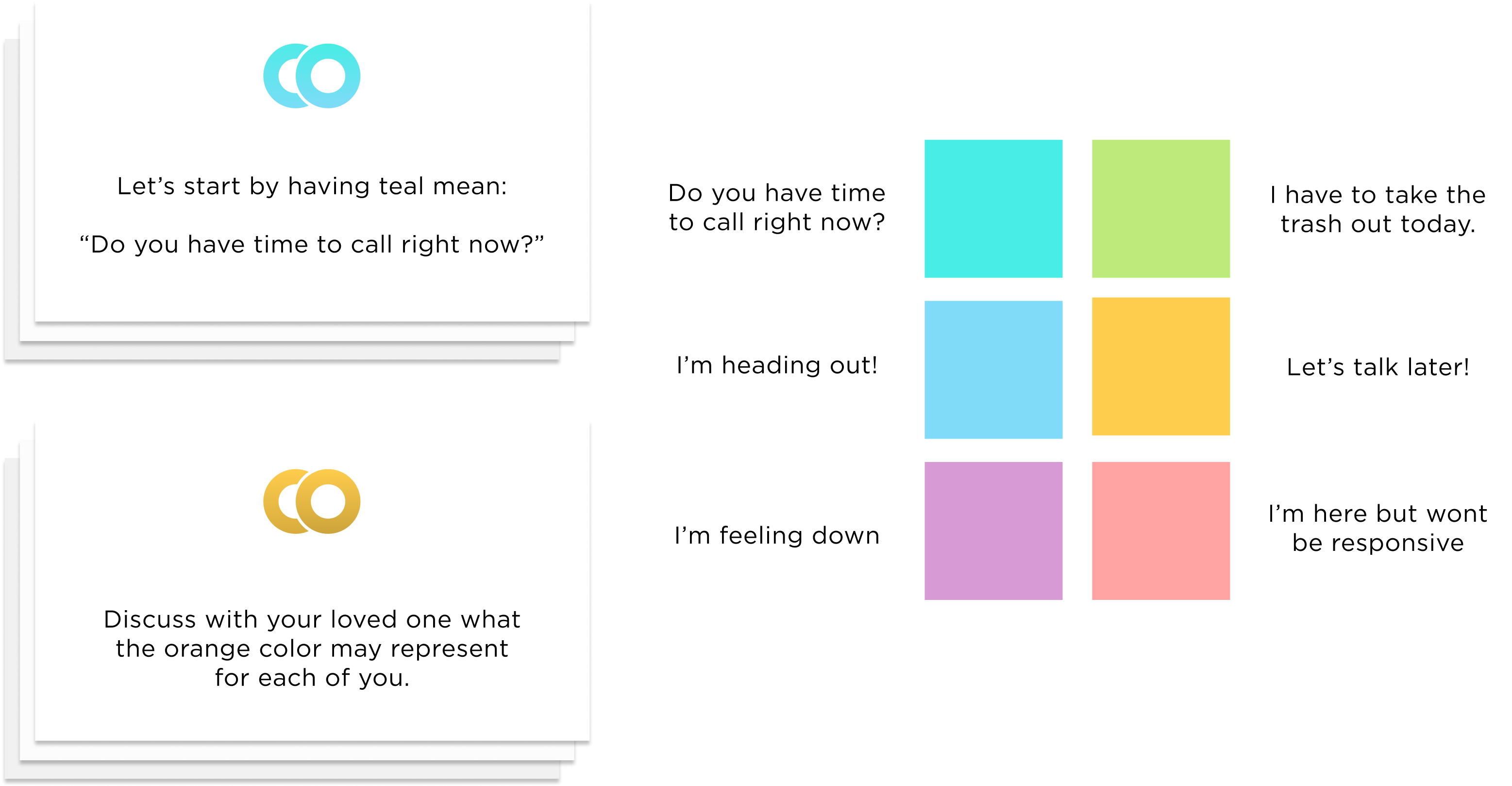
“it'd be cool to code it with your loved ones. Everybody translates colors differently.” -P4
“I prefer for it to be coded on the plant...as a reminder...it’s kind of hard to remember the meaning of each color.” -P5
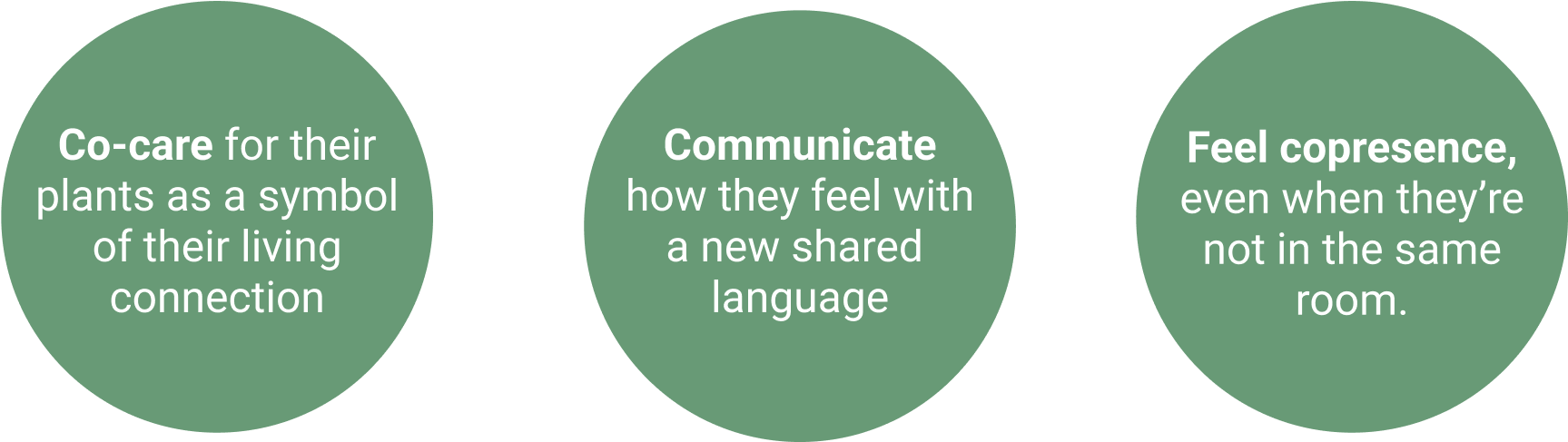
Based on this research, our solution should enable people to:
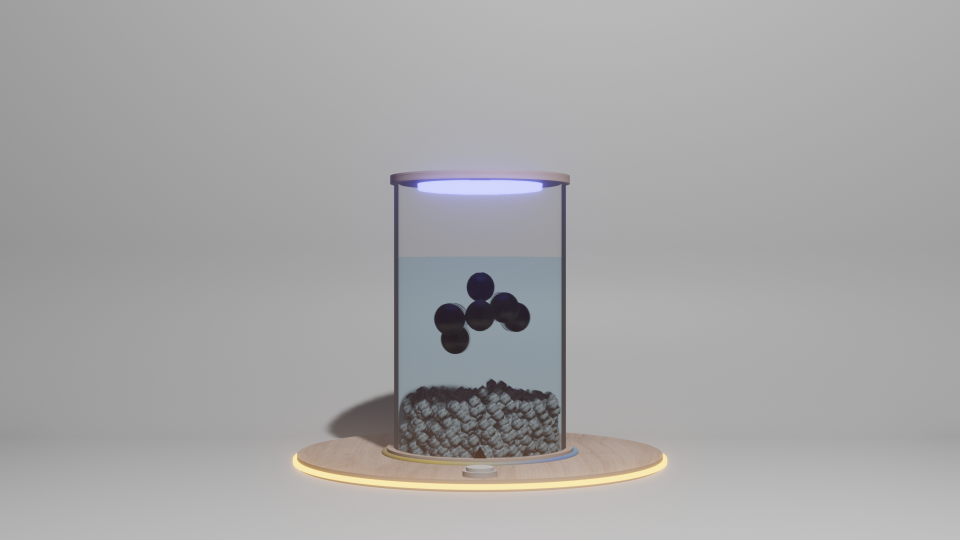
To address the concern that people were hesitant to touch the plant, I suggested using marimo moss ball terrariums.
We still wanted people to co-care for a plant, so I further researched on how marimos needed to be cared for and found that they needed to be rolled by water occasionally to keep their round shape.
This detail guided me in designing the cylindrical form of the terrarium, because it felt the most organic for rolling the marimos.