





The fourth trimester (defined as the first three months after the baby’s birth) is an intensive transitional period for new parents, but especially for mothers and birthing people. They are providing intensive care for their newborn, while recovering from the physical and emotional challenges of delivery, subject to parenting stress, and at risk of postpartum depression (PDD), which negatively impacts their health and the development of their baby. In addition, once the baby is born, the focus is shifted to the baby, which detracts from mothers and birthing people getting sufficient support.
Research shows that partner’s support and involvement during this time can improve the well-being of mothers and birthing people.
Greater emotional support by partners can lead to:
all of which protect mothers and birthing people from postpartum depression symptoms.
Yet emerging research on first-time fathers’ and partners’ experiences reveal that they feel a lack of preparation for this period of time. Society’s increase in expectations for fathers and partners and a lack of father/partner-specific models make it more challenging to adjust to their new role after childbirth and live up to these new demands. Even when they go to formal support programs or attend healthcare visits, they feel that the resources and information offered don’t speak to their specific challenges as fathers and partners.
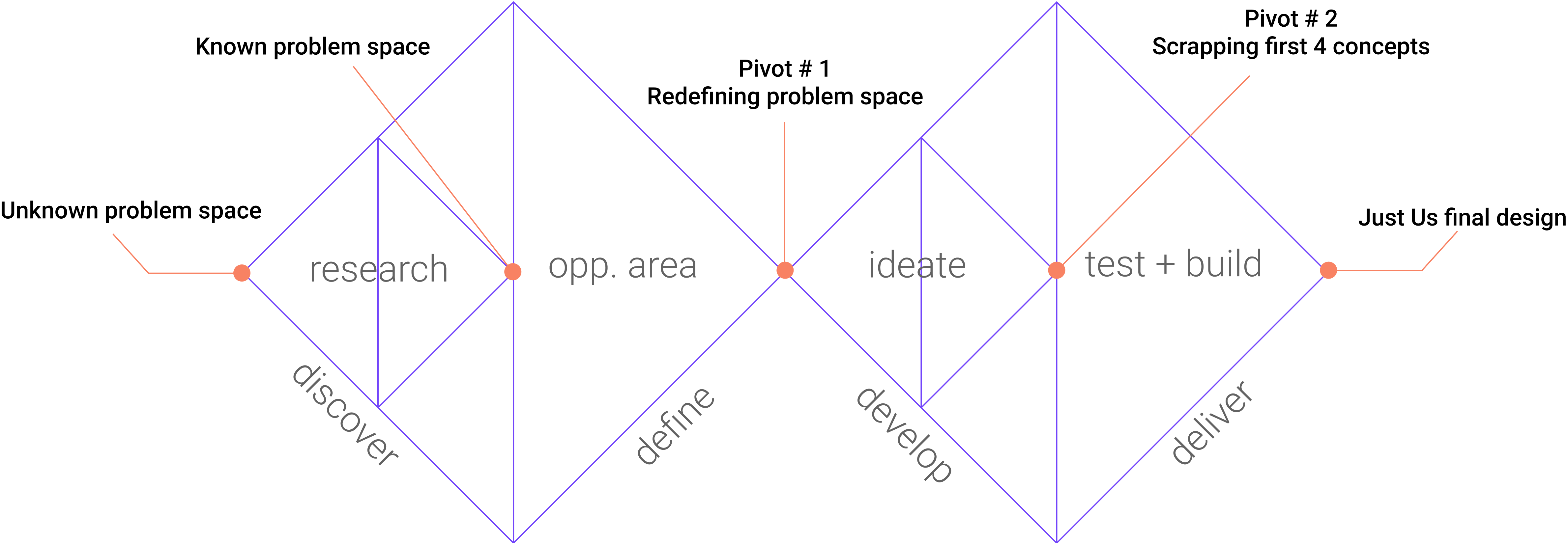
Over the next 3 months we conducted user interviews to understand:
From birthing people: to learn about the types of support that they needed from their partner and ways they communicated these needs.
From partners: to learn about ways they understood and supported their partner, challenges they faced in doing so, and resources that they looked for during this time.
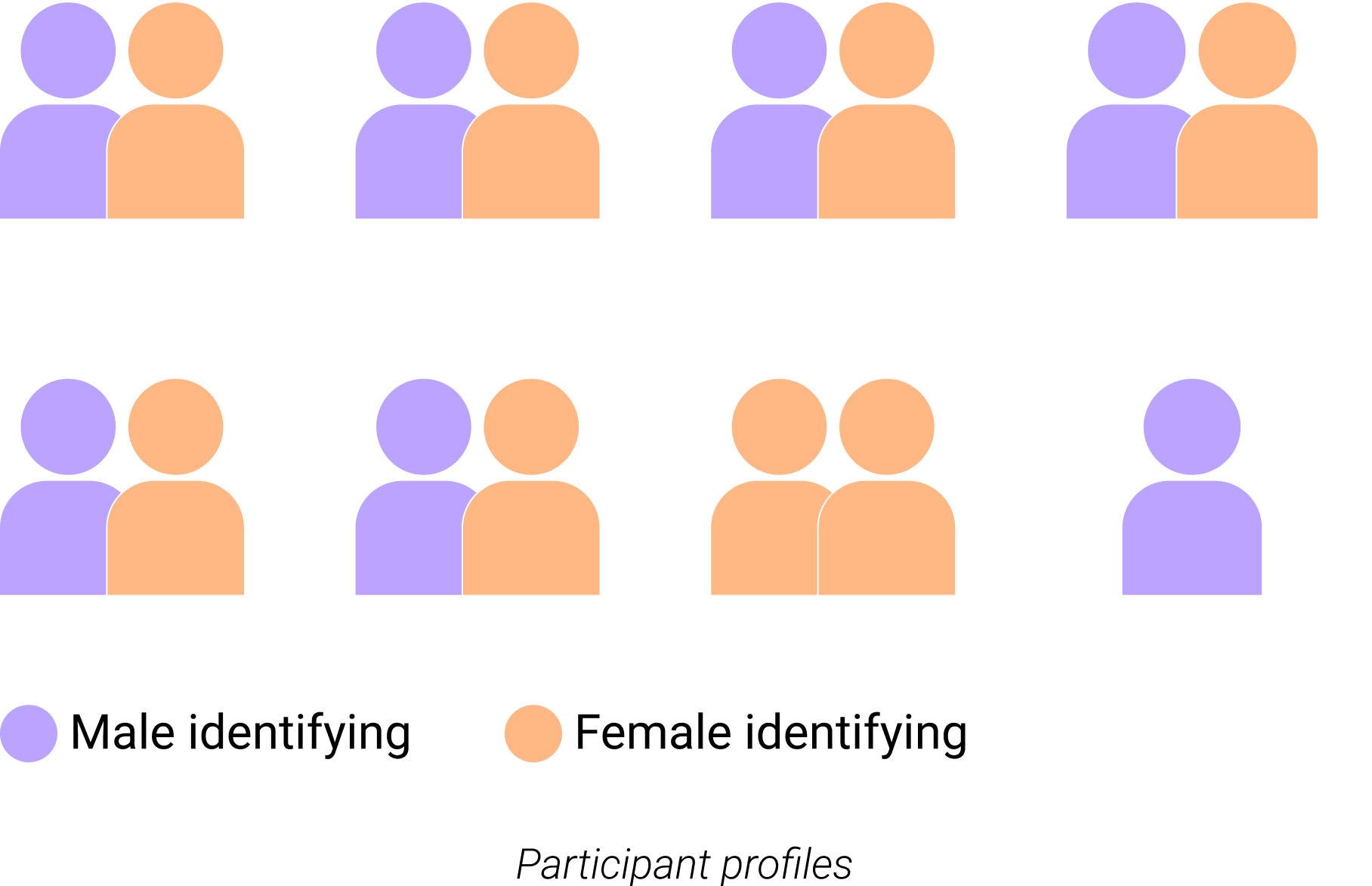
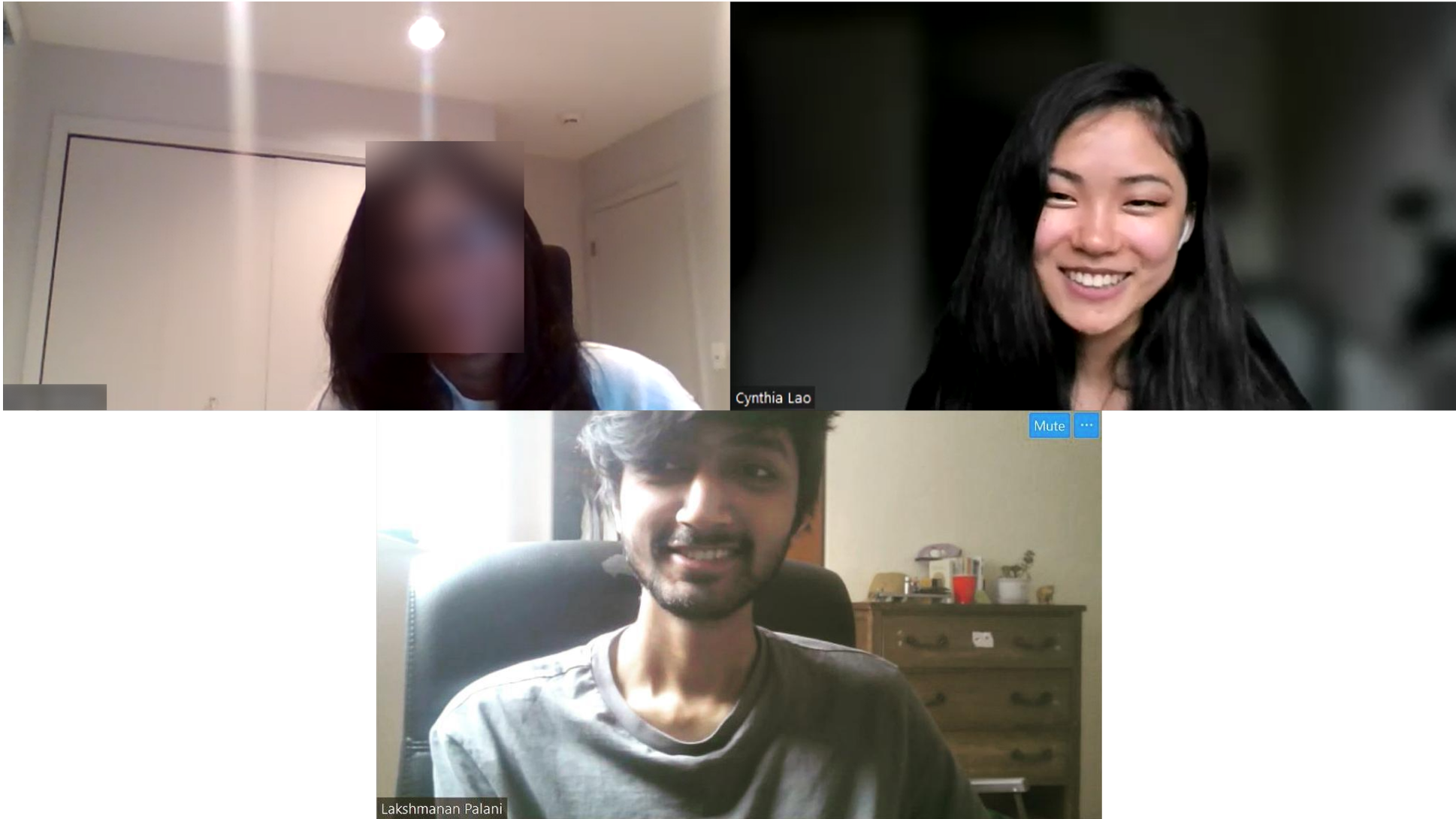
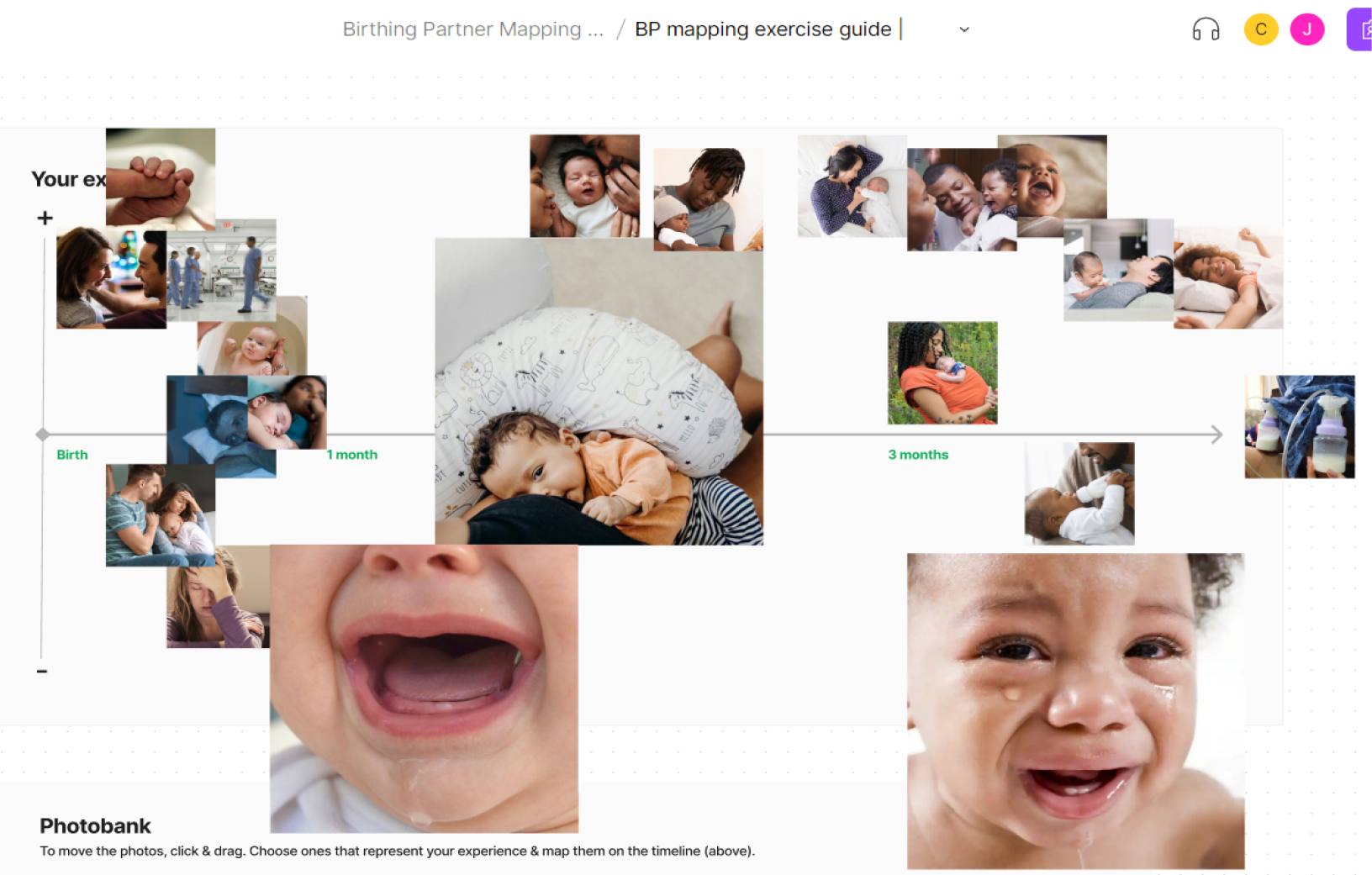
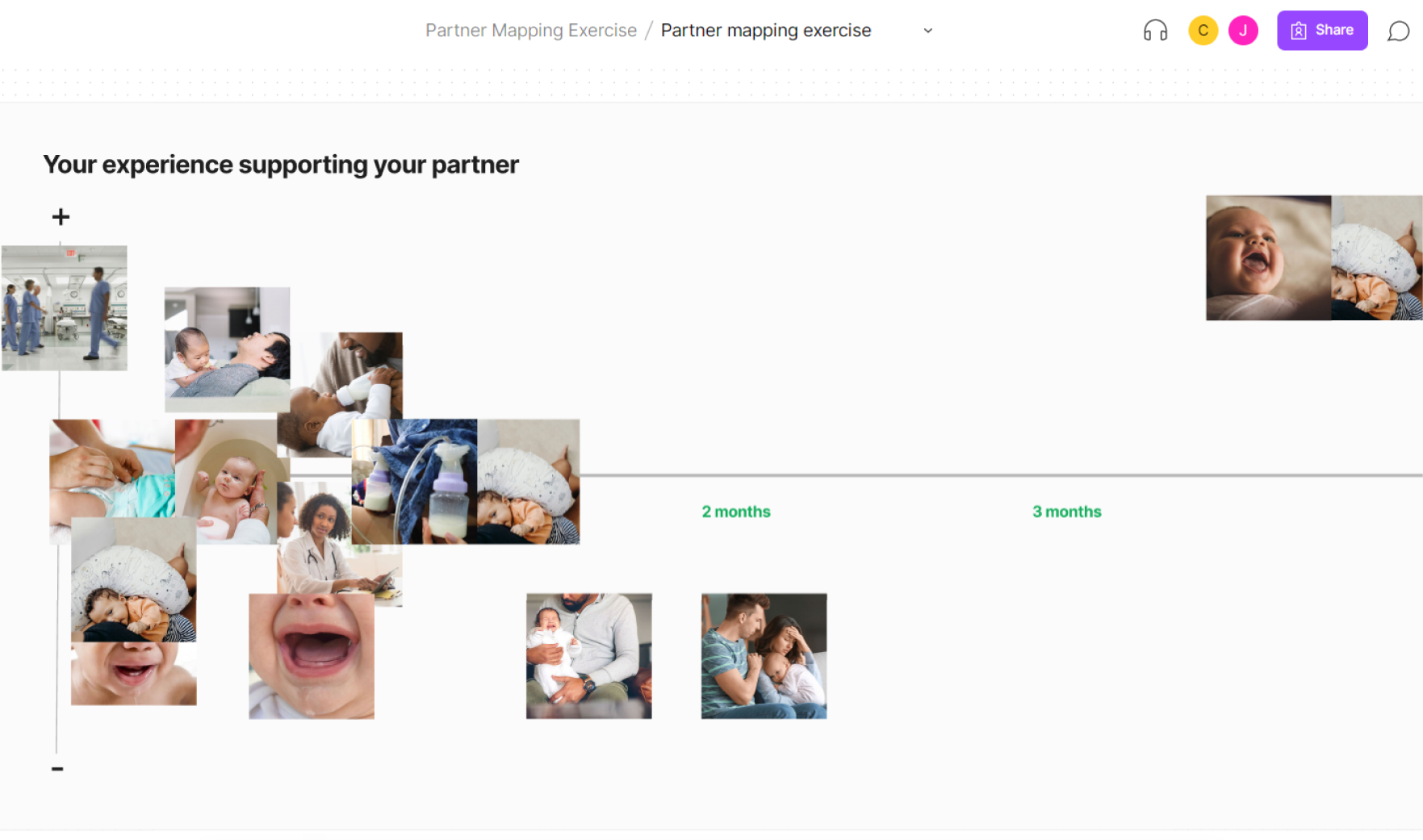
I wrote the research session guide for partners, recruited all 15 participants and was the only point-of-contact with participants to set up interviews. I delegated team members to facilitate interviews, and out of the 15 interviews, I moderated 5 of them and note took for 6 of them.
To understand:
In talking to experts, we learned about the existing supports for birthing people and partners, which helped uncover gaps and highlighted opportunities to amplify what is working.
The SME’s we interviewed ranged from doulas to marriage and family therapists, to parent support coordinators. They all have knowledge in the post-birth period, or work with couples to provide them with support in the fourth trimester.
We conducted 30-minute remote semi-structured interviews and attended the Conscious Fathering course to get a firsthand experience of what fathers and partners learn.
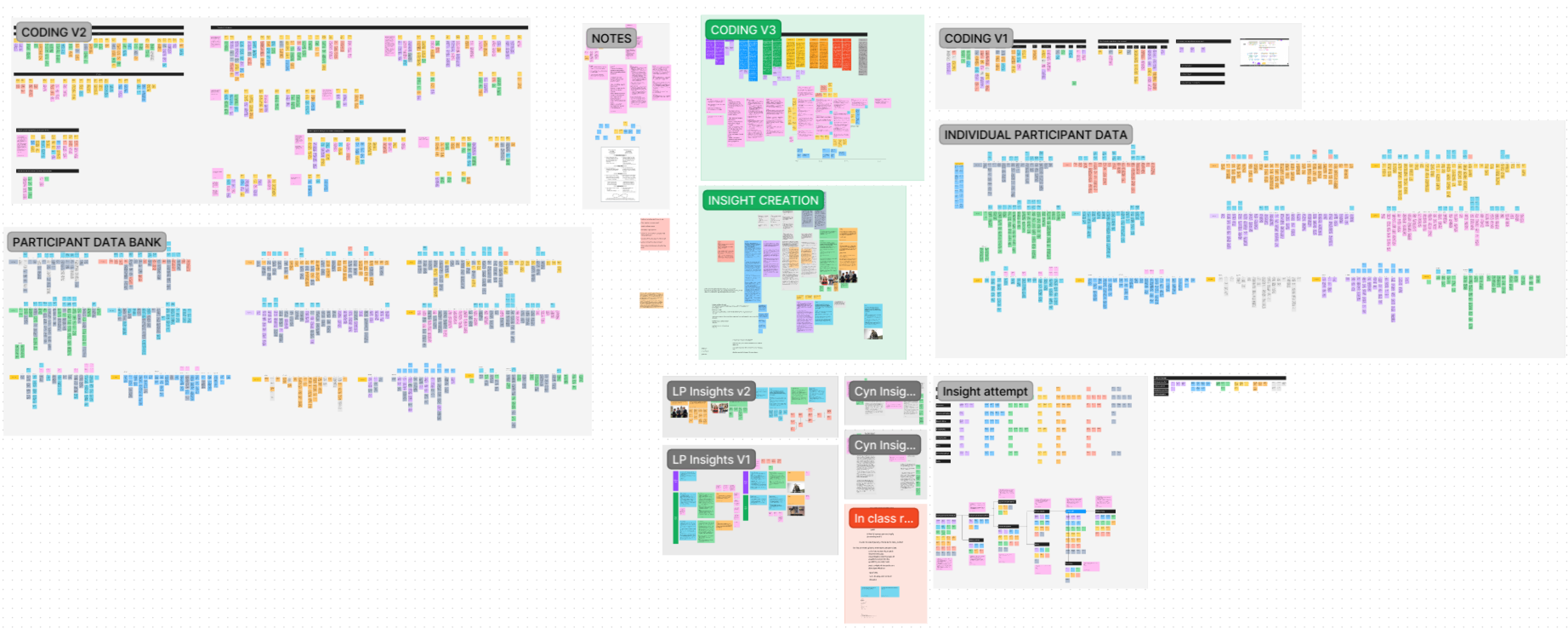
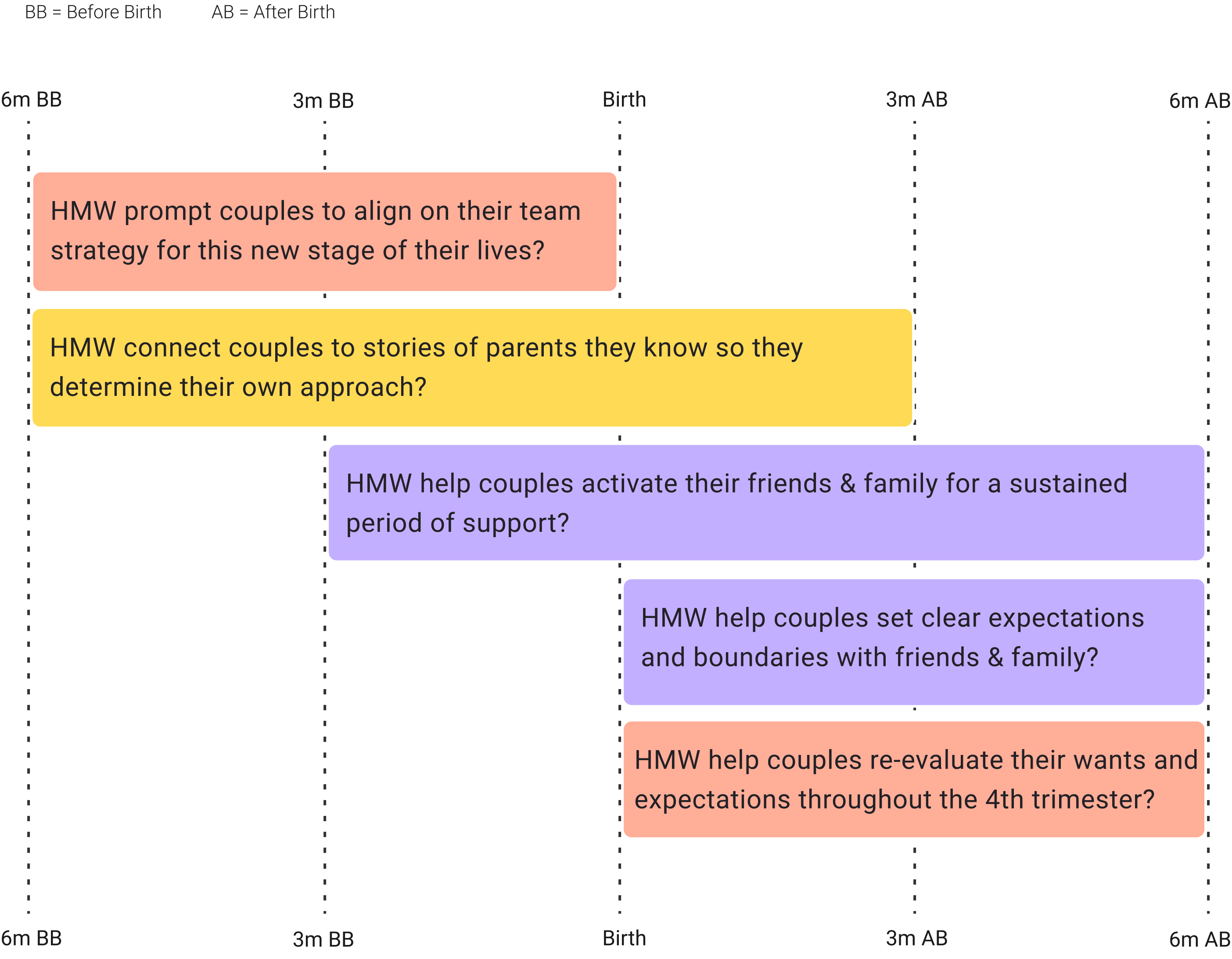
Before birth, most couples talk baby care tactics, not team strategy. Without alignment on their team approach, they struggle to work together when the baby comes.
Couples hold their pre-birth wants and expectations sacred. They fail to let go and re-evaluate them during the challenging post-birth period.
Couples are overwhelmed by generic yet conflicting advice. They want to hear stories from parents they know to inform their own choices.
Partners put on a strong front for birthing people. Sharing their struggles feels counterproductive, but it can help the couple feel closer.
Friends & family fade out after initial baby days assuming everything is fine. Couples are still struggling and want them to offer support for sustained period.
Extra pair of hands are not always helpful. Couples need to set clear boundaries and give specific instructions to friends & family else the helpers end up being a burden.
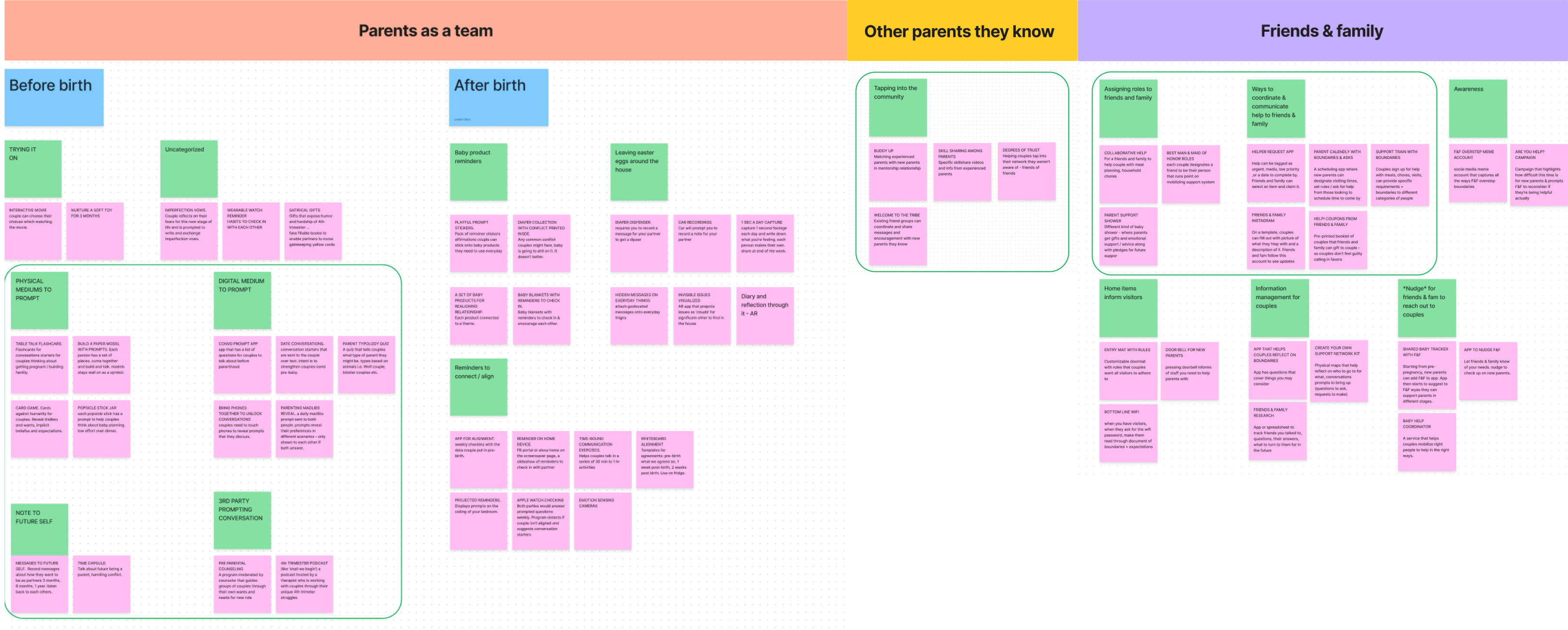

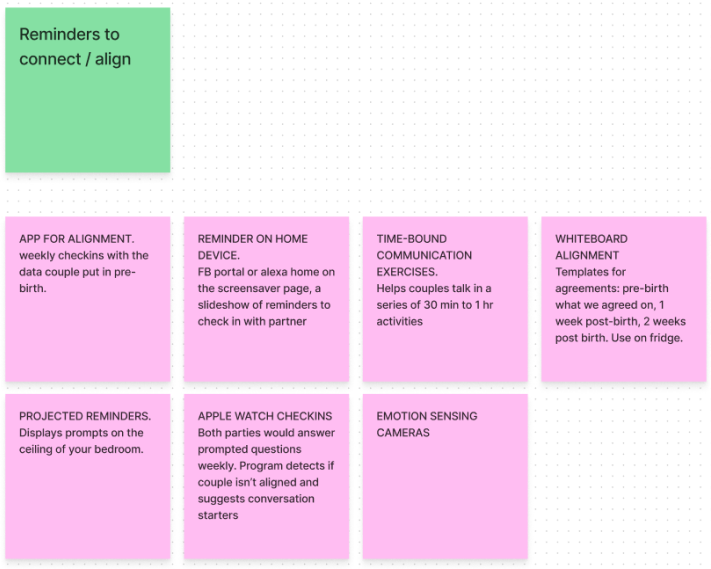
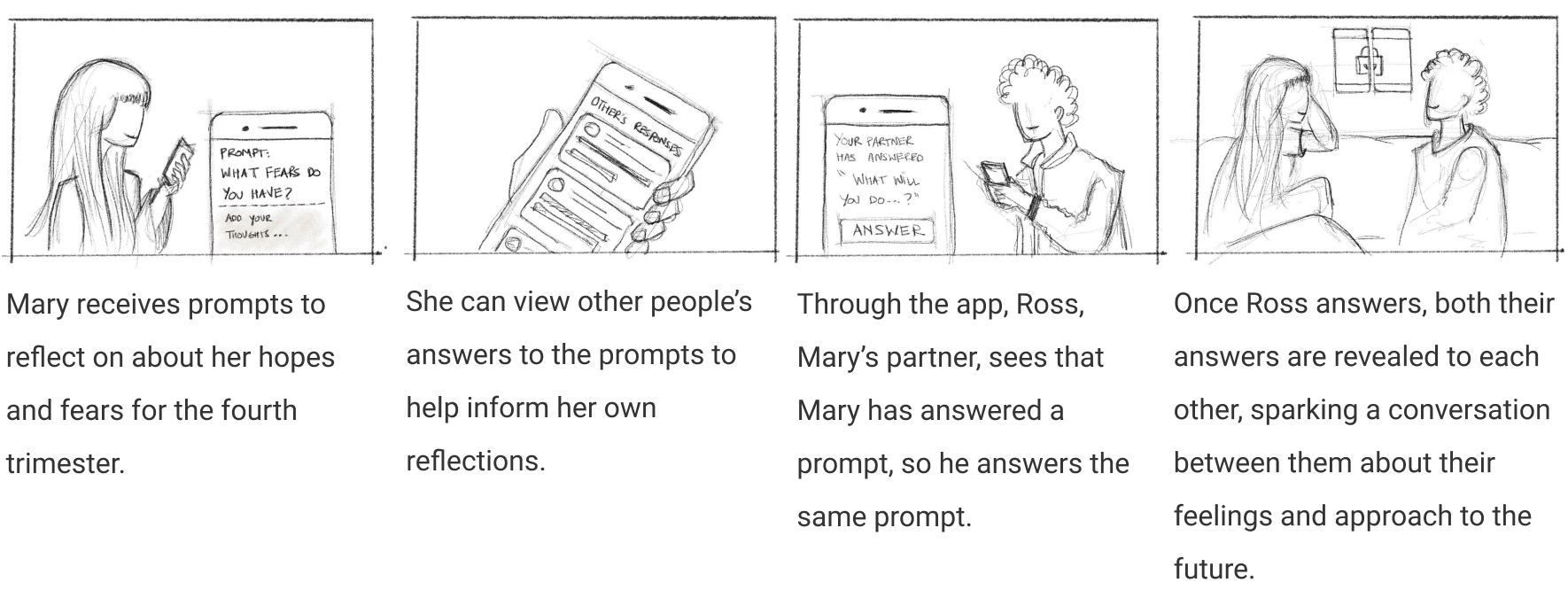
I proposed the “Diary Reflection” concept, which is:
by using this main cluster of sticky notes along with other ideas from the ideation board:
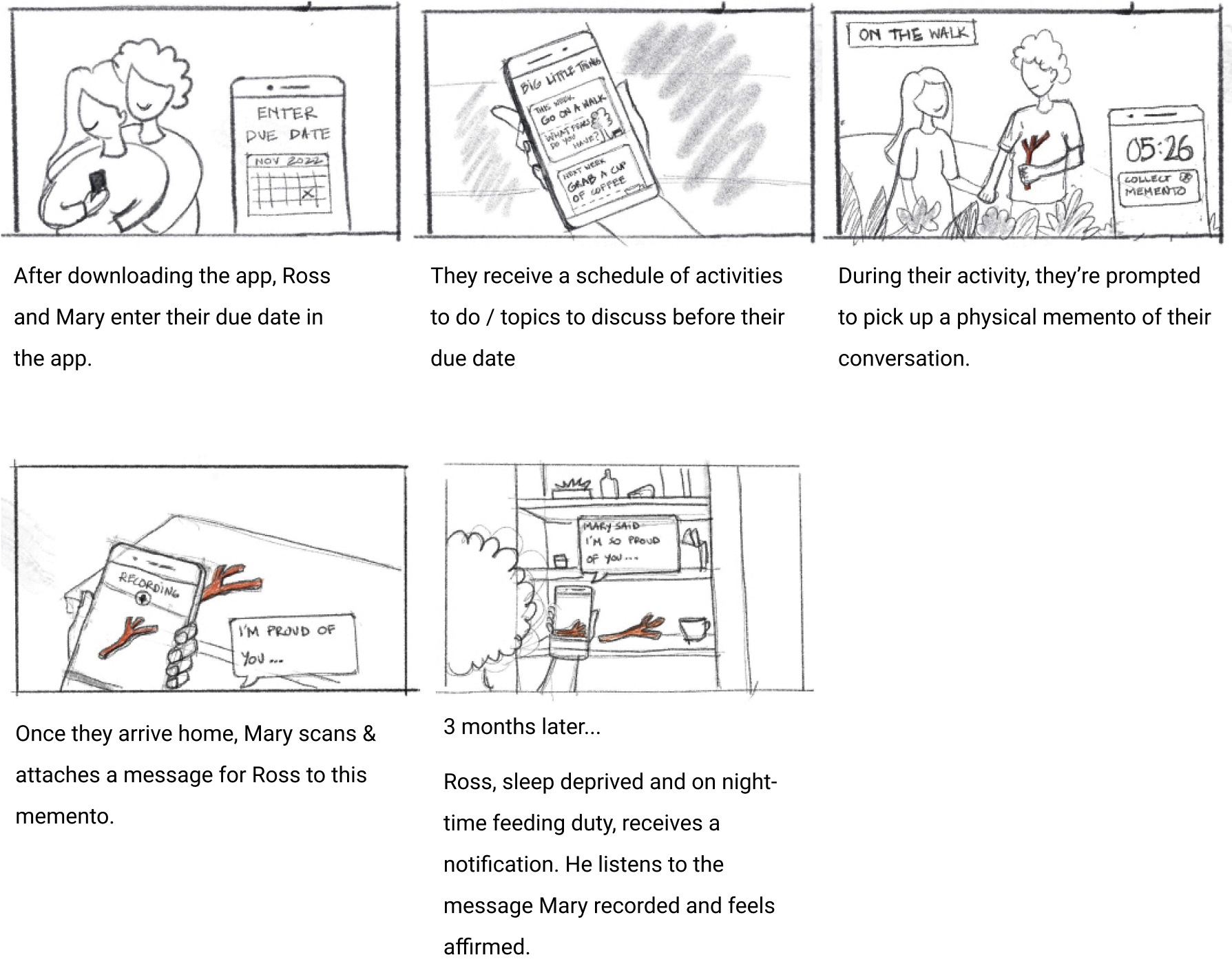
A brief rundown of the other 3 concepts:
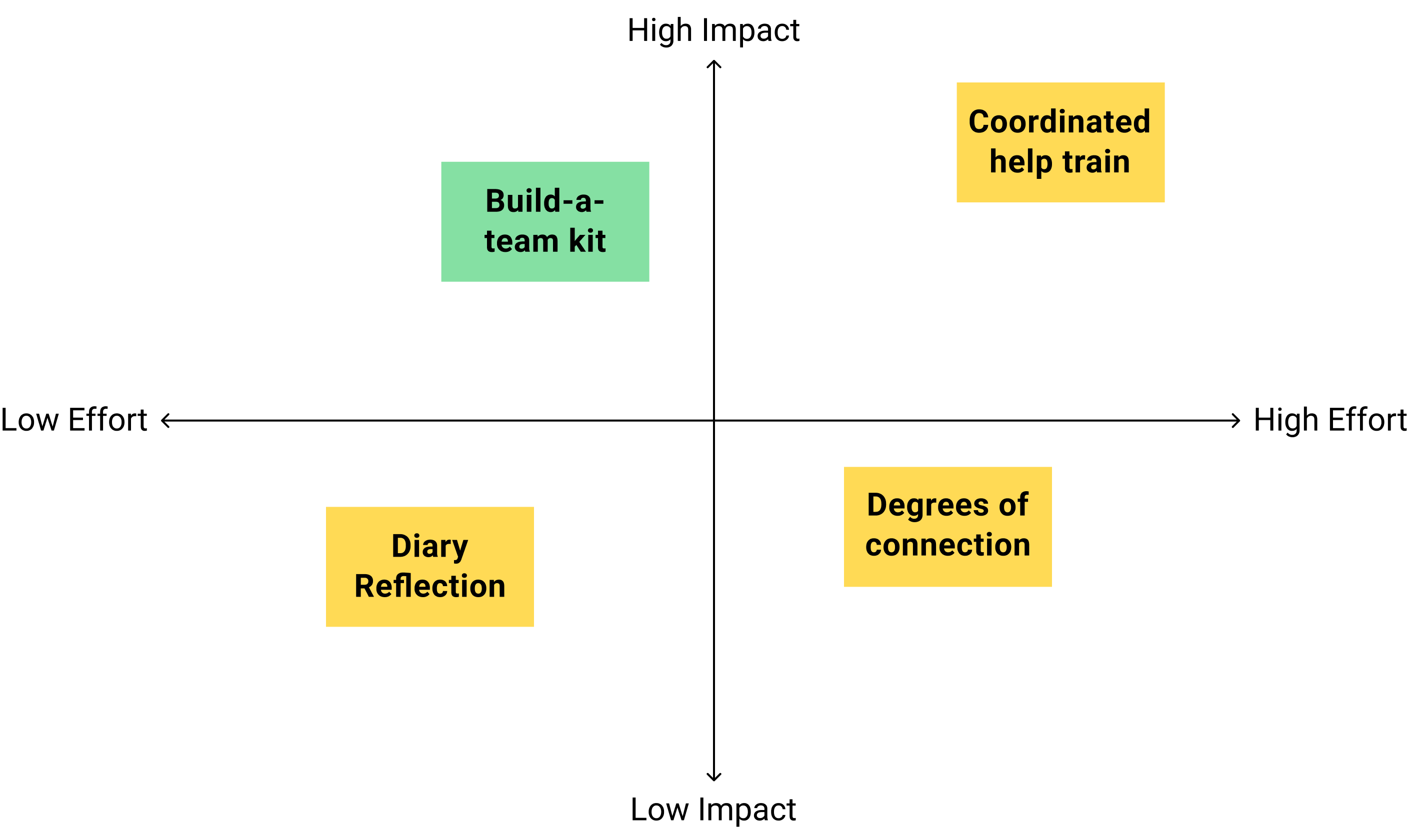
We wanted a solution that was impactful: How helpful is our concept to couples?
And for us to be mindful of the effort it takes to build up a product: What is the easiest to build to see results considering research, design, and engineering efforts?
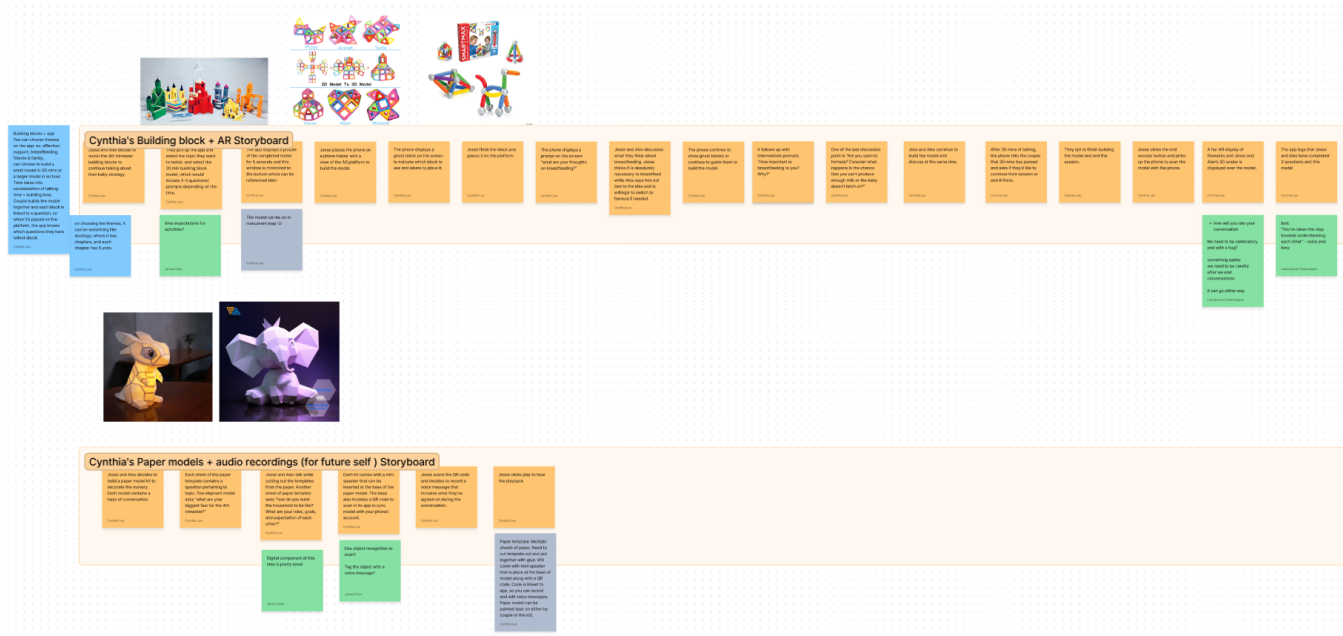
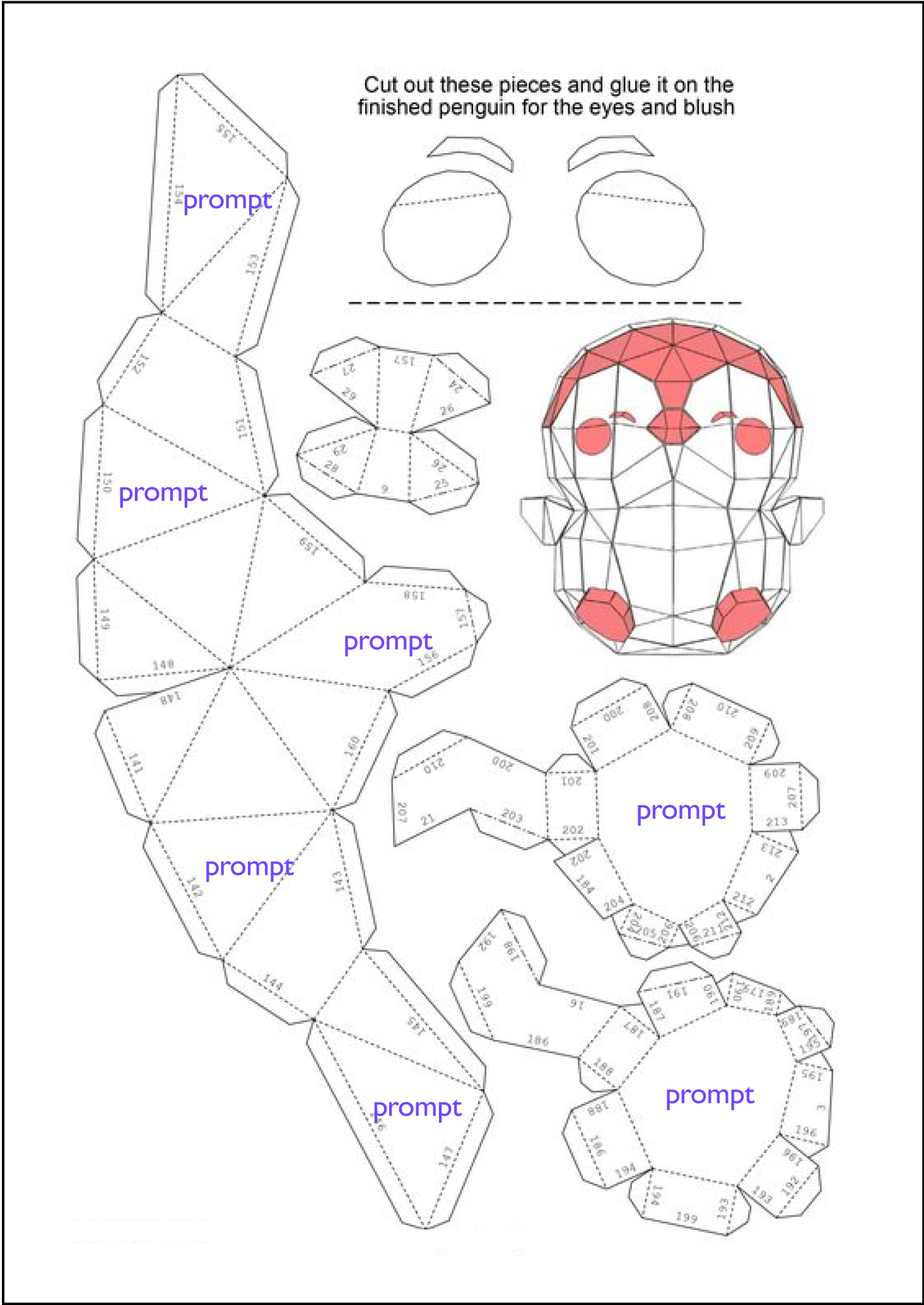
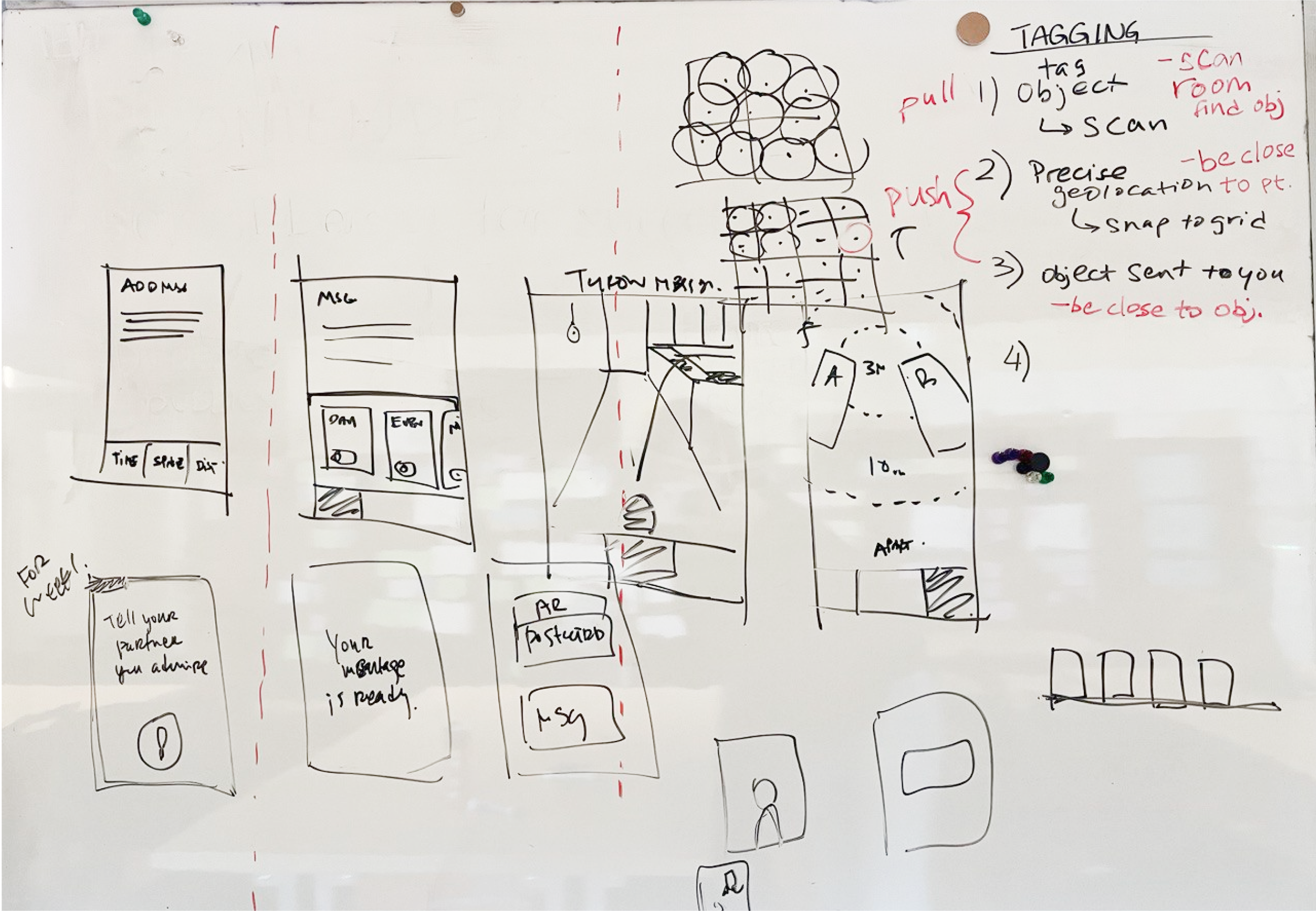
The 2 storyboards I created revolved around using artifacts like building blocks or paper models to support couples to have hard conversations.
A physical-digital toolkit that guides couples to talk about what’s important over 60 days and align as a parenting team before the baby comes.


To understand:

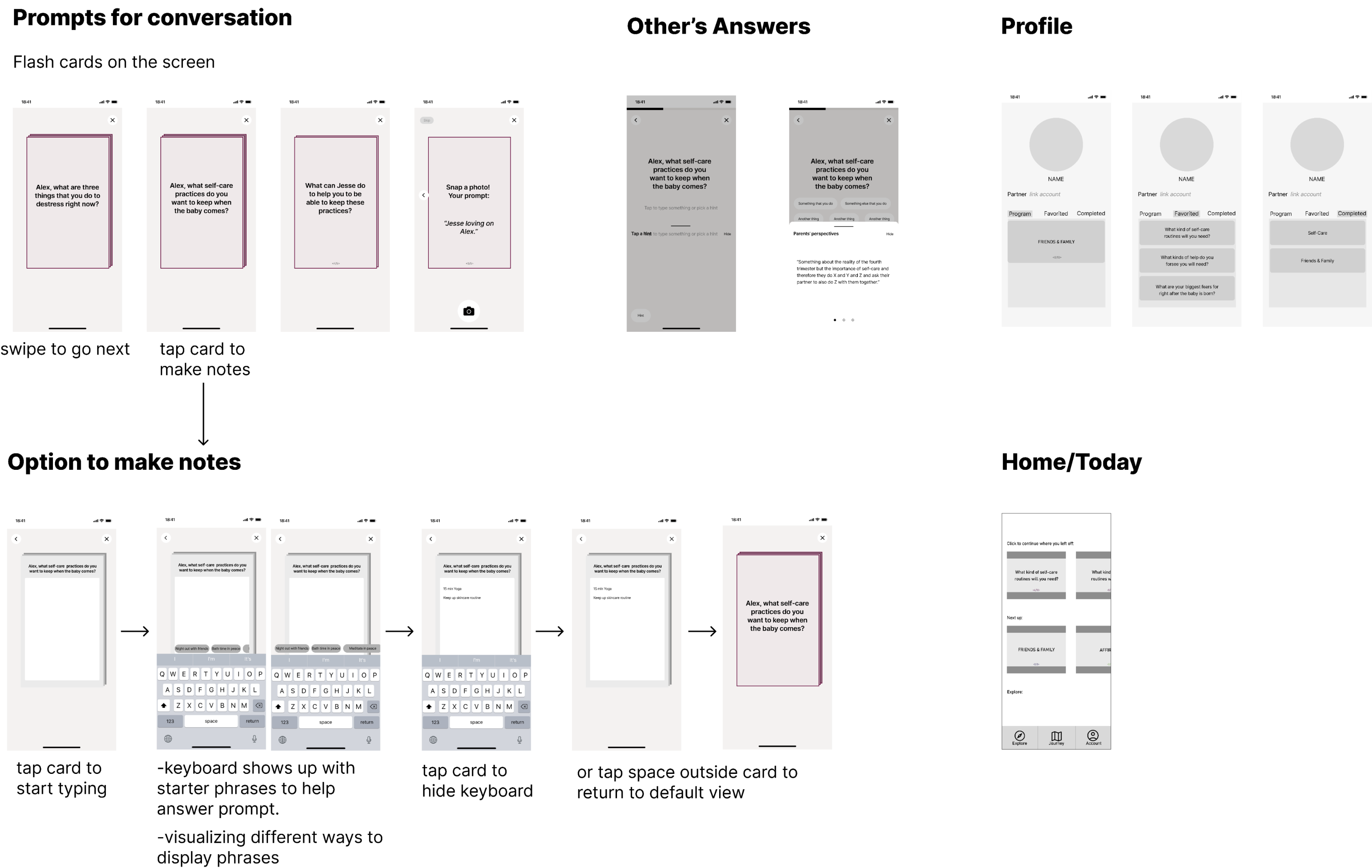
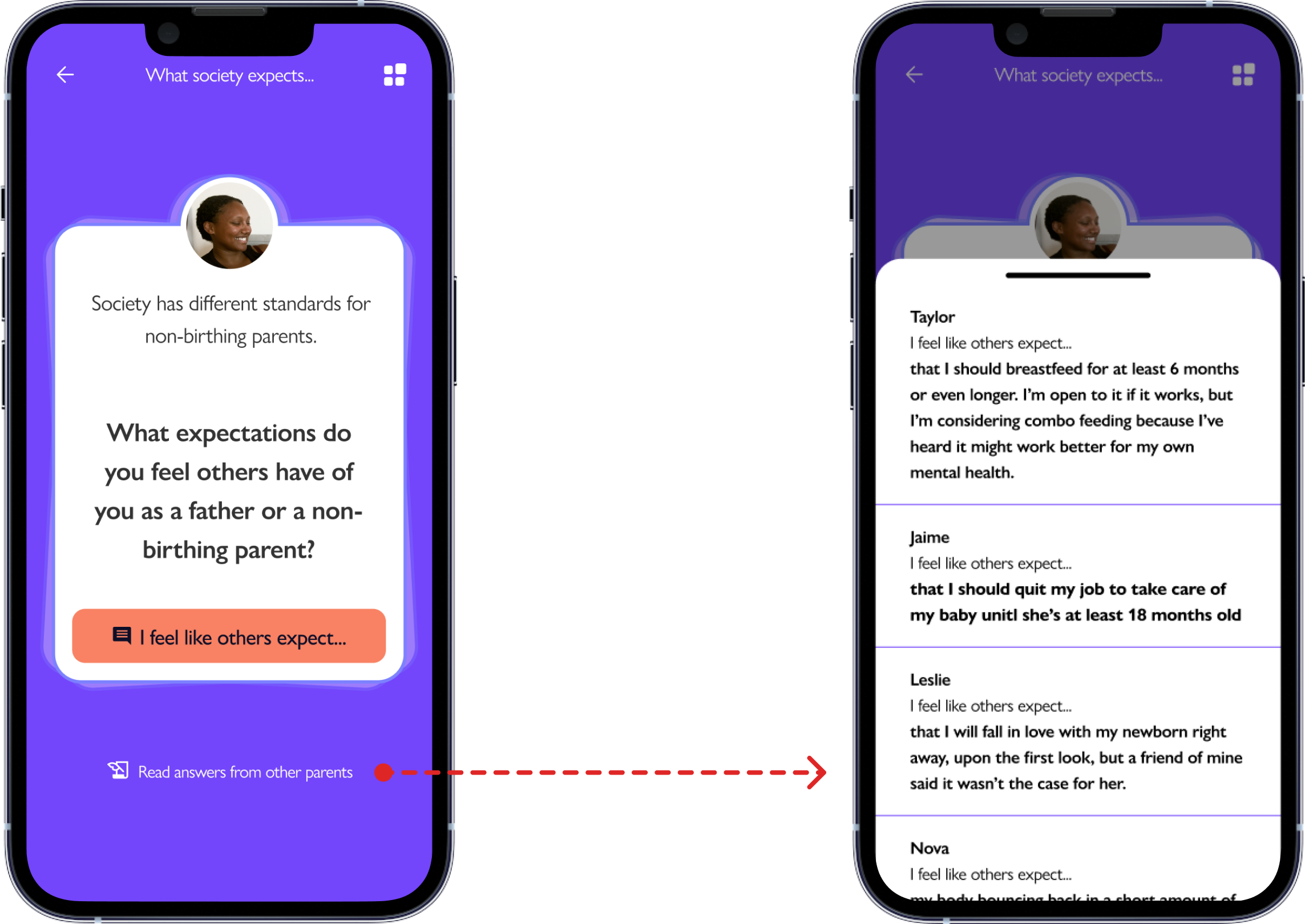
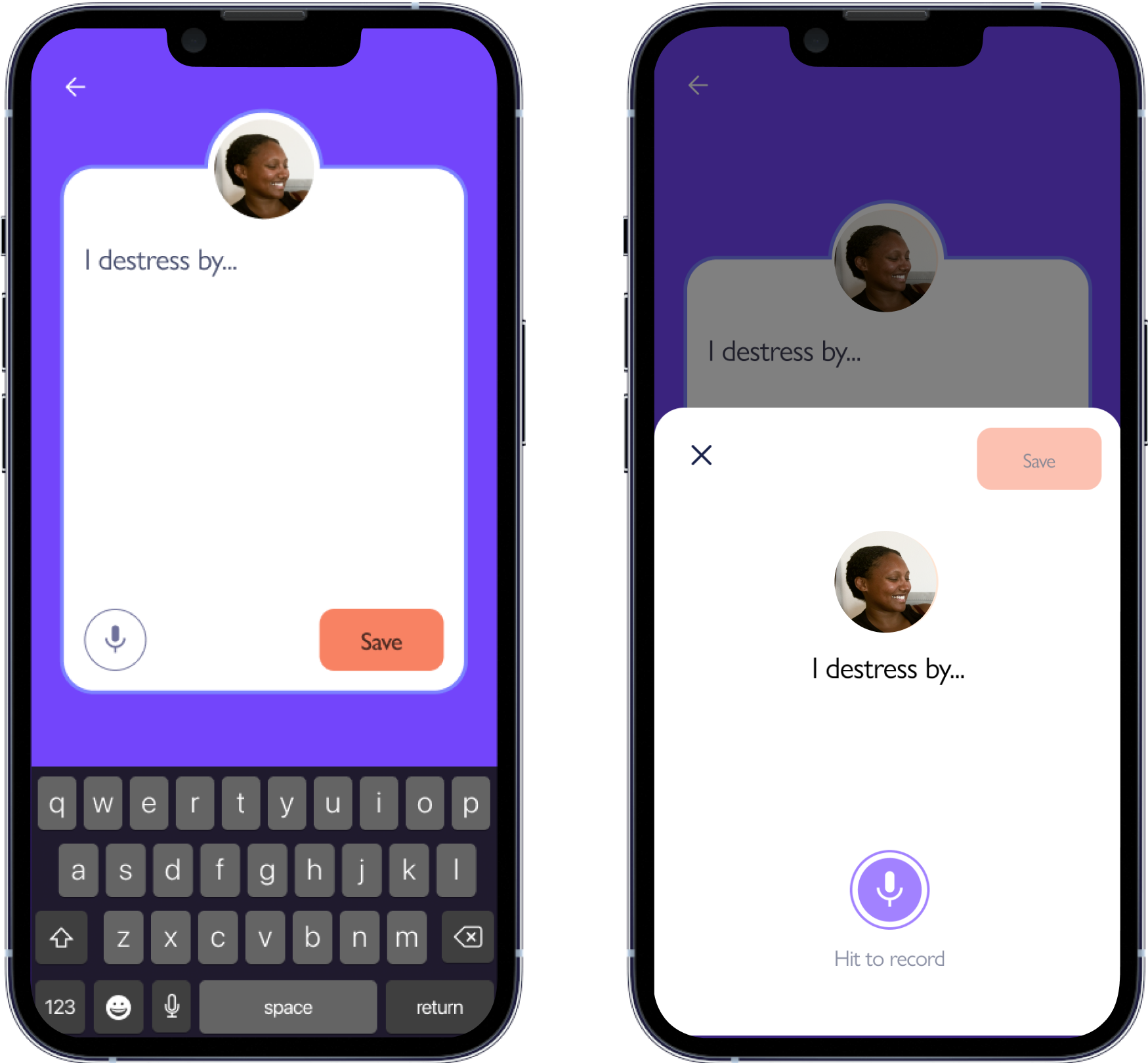
I drew up wireframes for what the prompts, text input for each prompt, profile page, and other parent’s answers would look like. I also prototyped swipe and tap interactions for how users would interact with the prompts, and how they would input text for each prompt.
Below shows my preliminary wireframes which were iterated on over 2.5 weeks of designing and building Just Us.
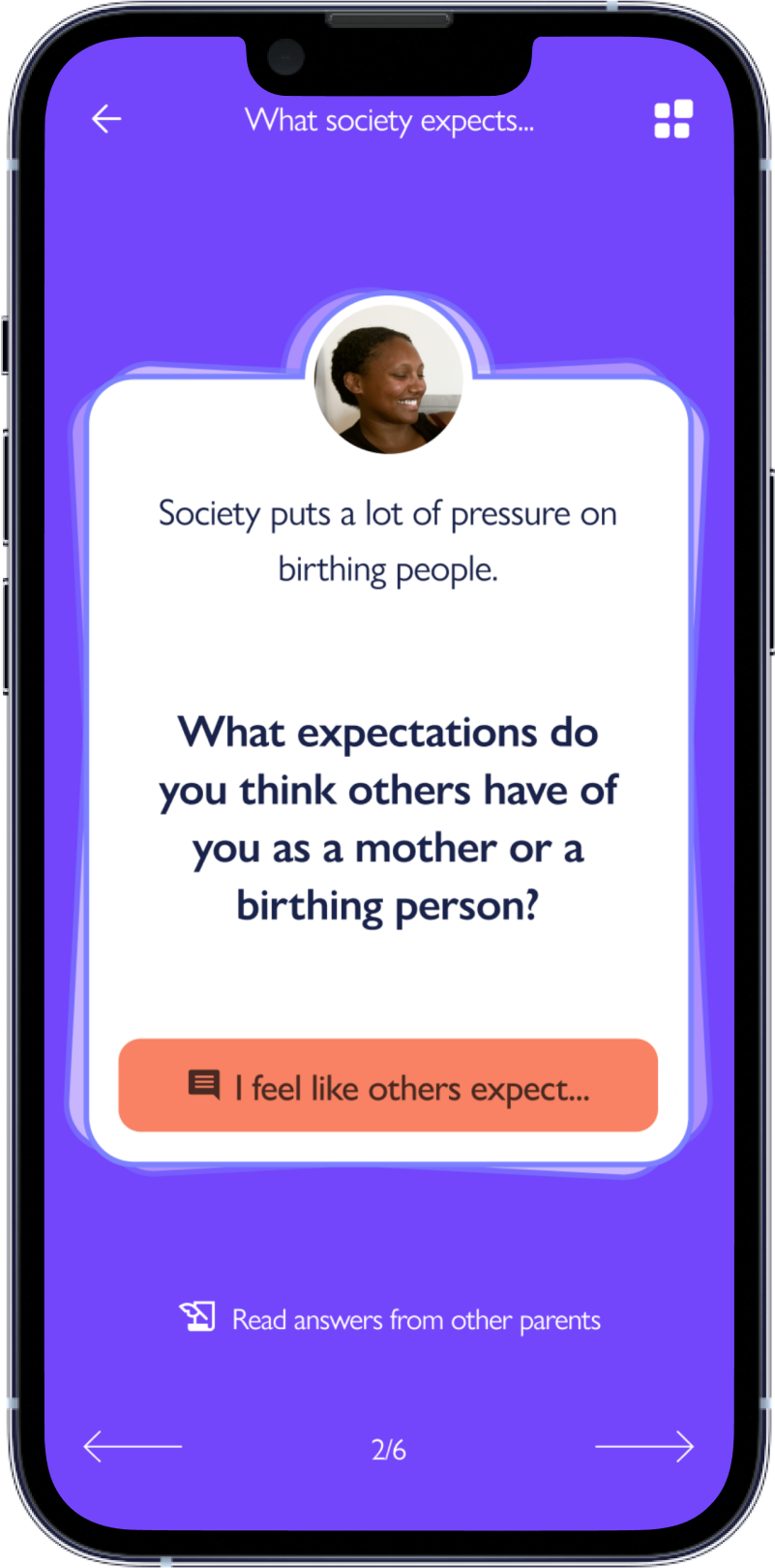
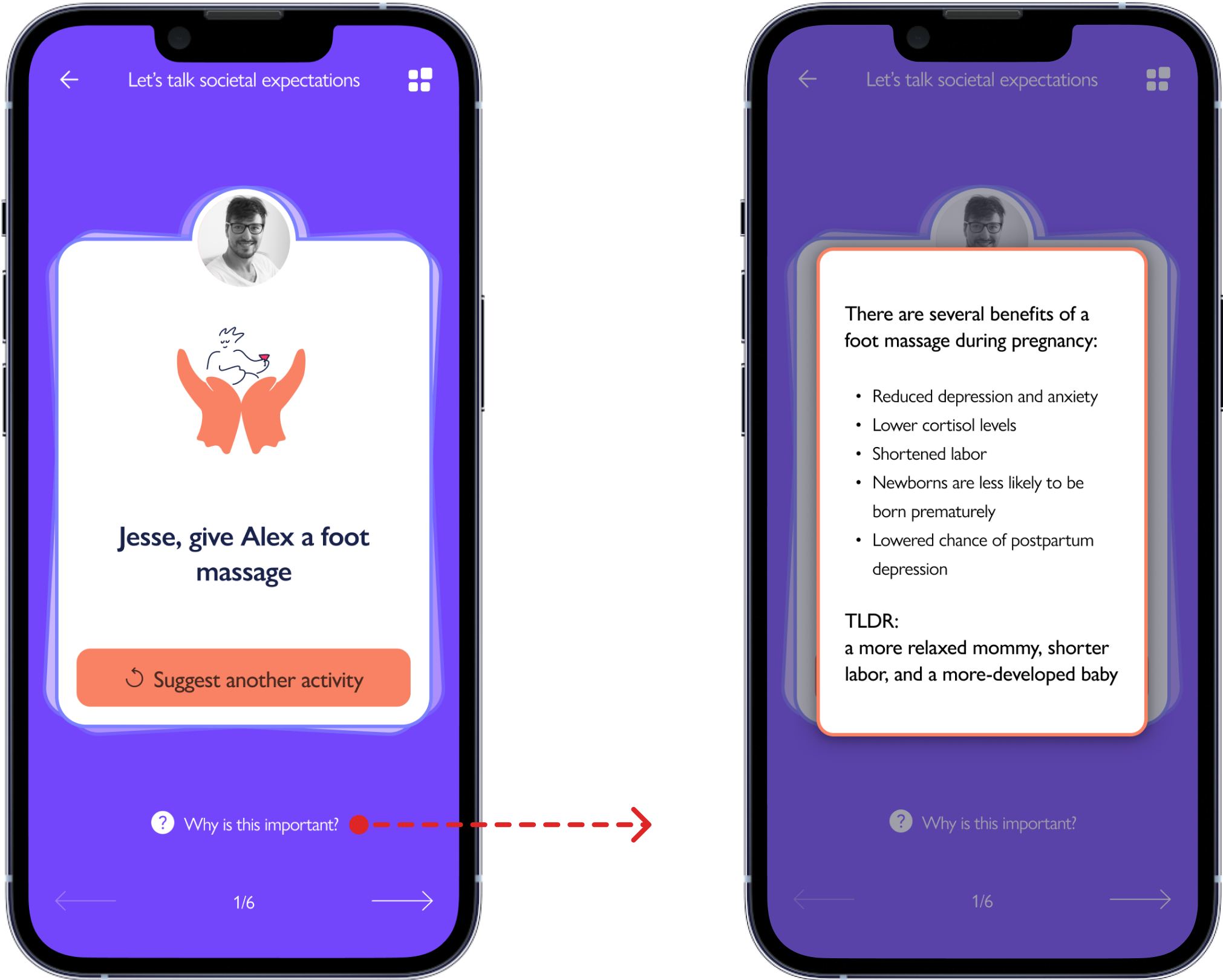

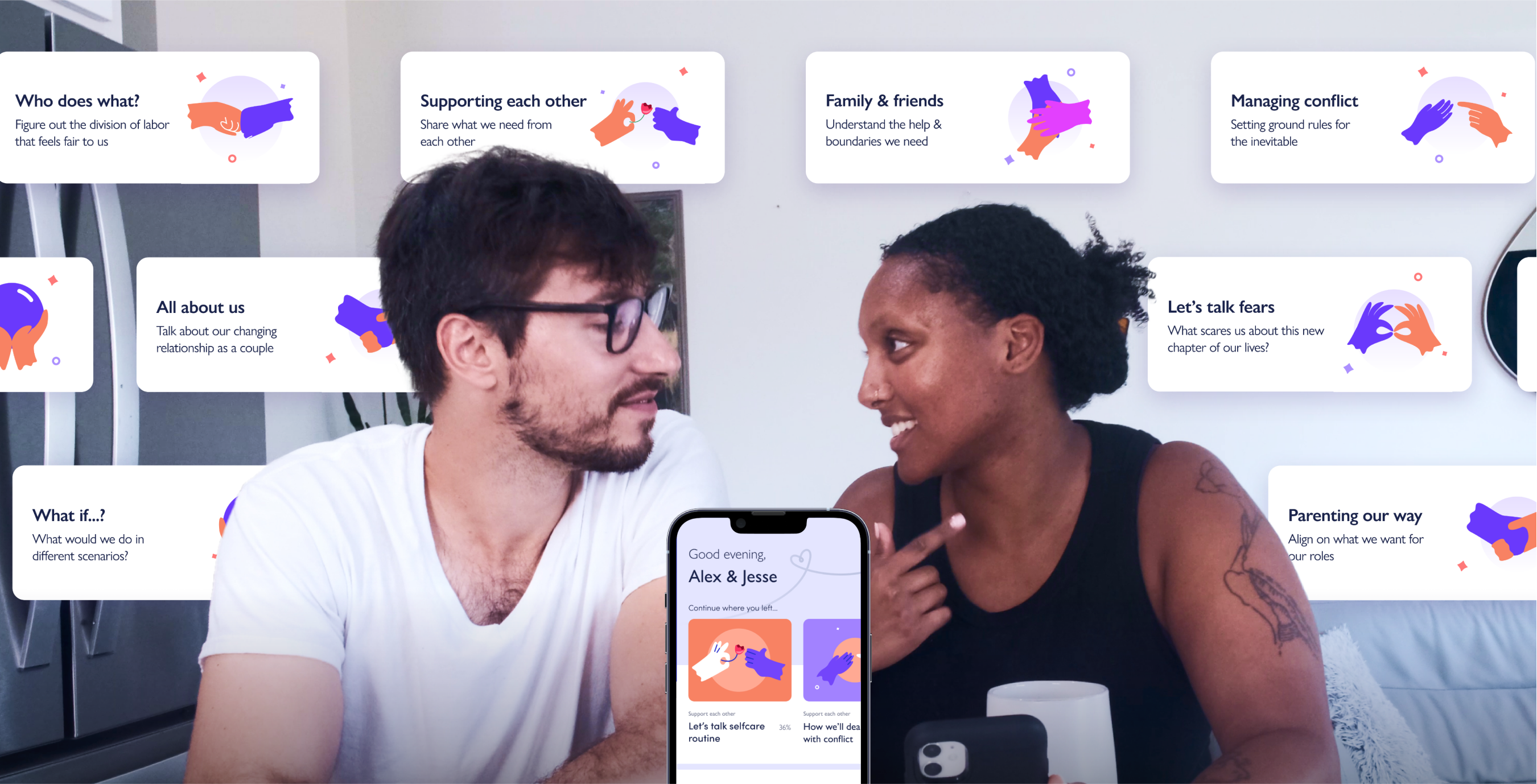
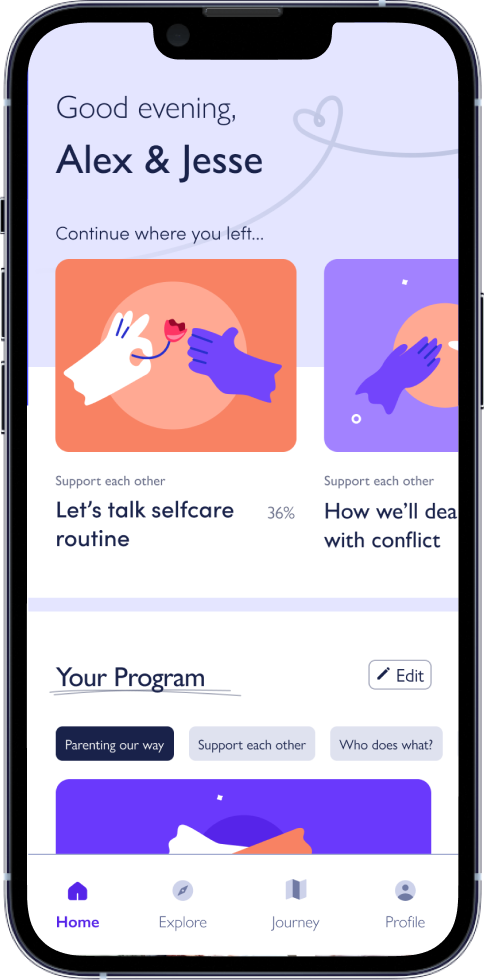
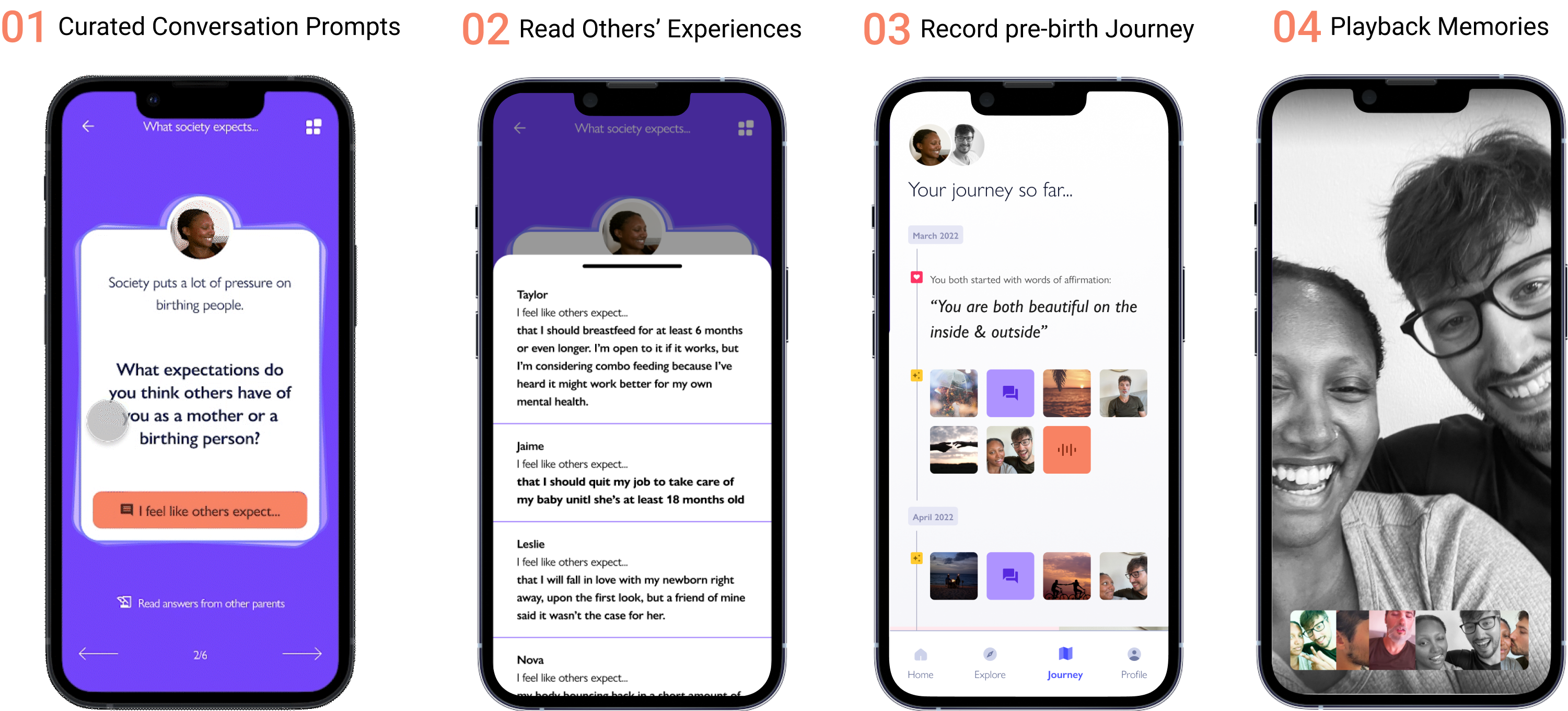
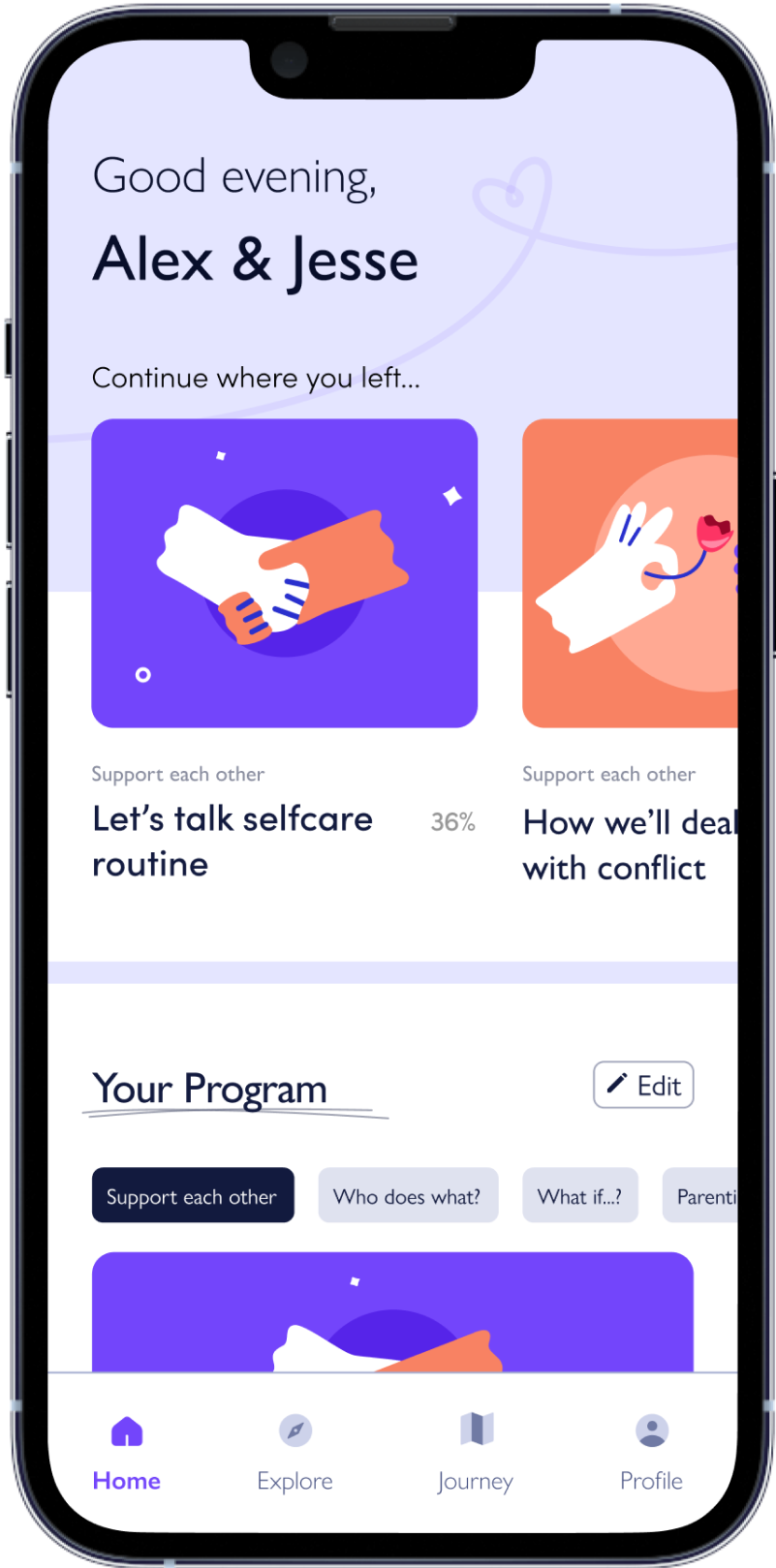
To help users access a variety of topics in an organized and quick manner, I designed the homepage to include:
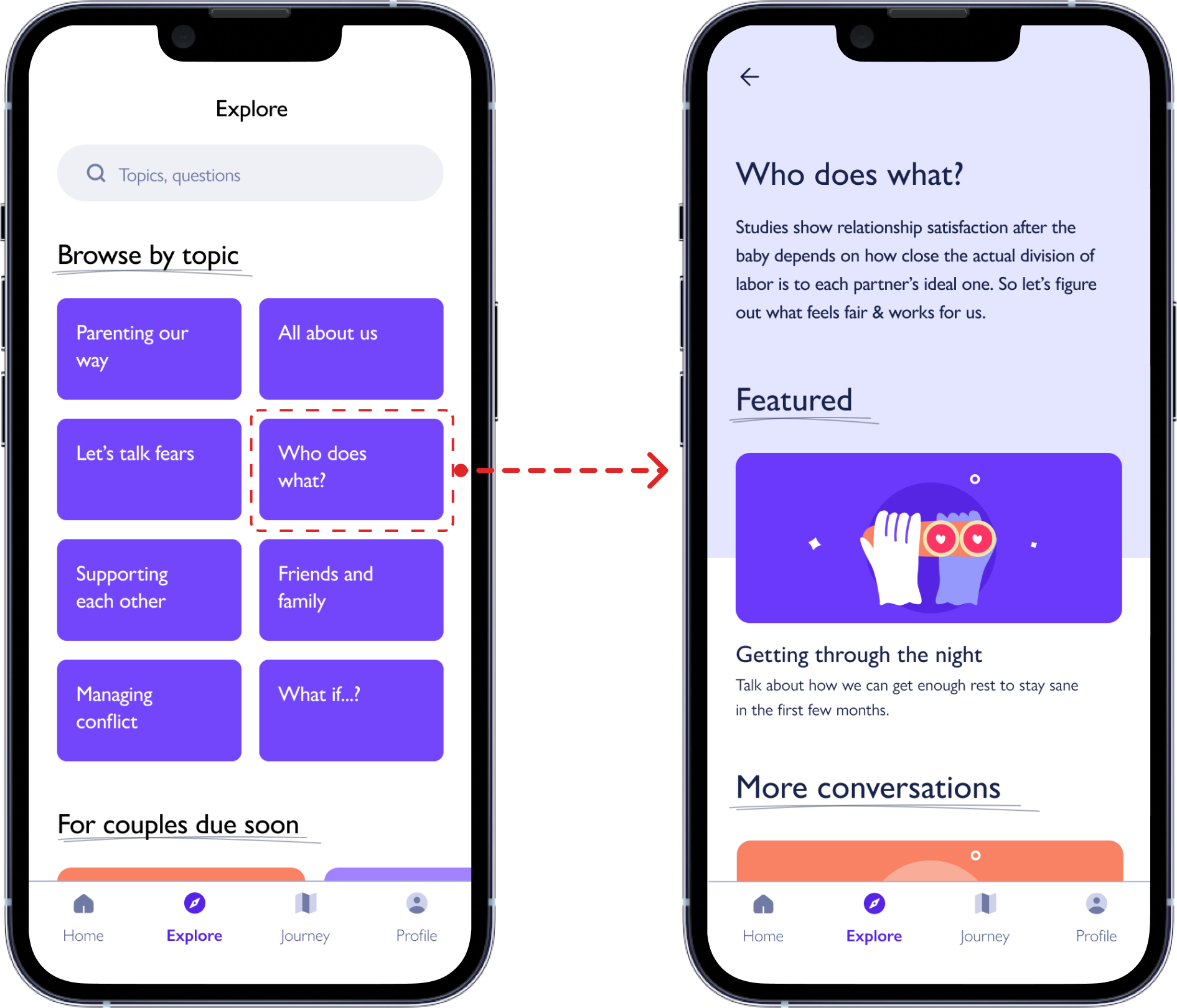
Explore allows users to browse through all topics including those not recommended in their program.
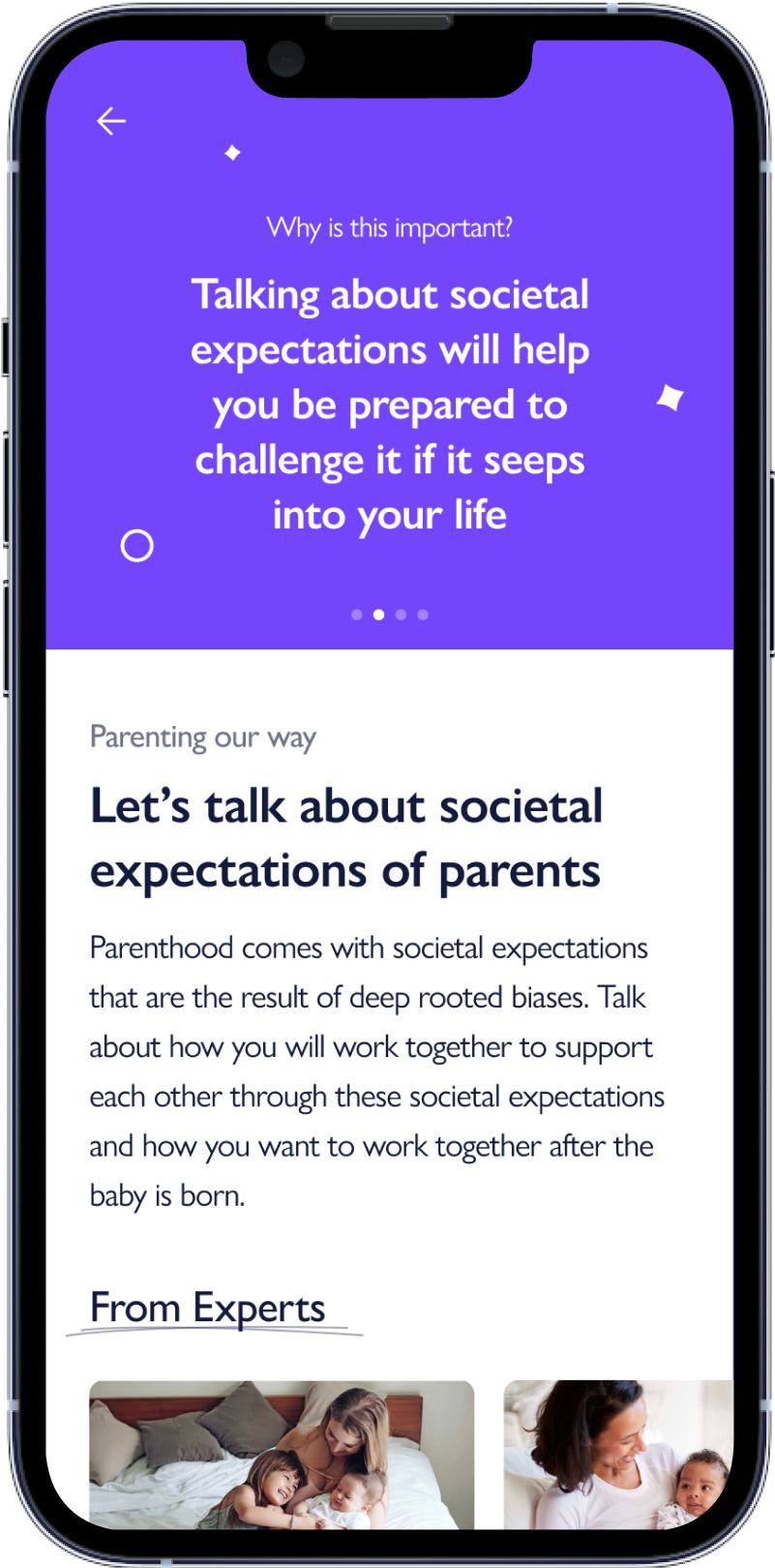
Once the couple chooses a Conversation, I provided an addition blurb that details what the conversation is about to help them decide if this is something they want to discuss.
I included articles written by experts as an option for couples who want more information about the topic.
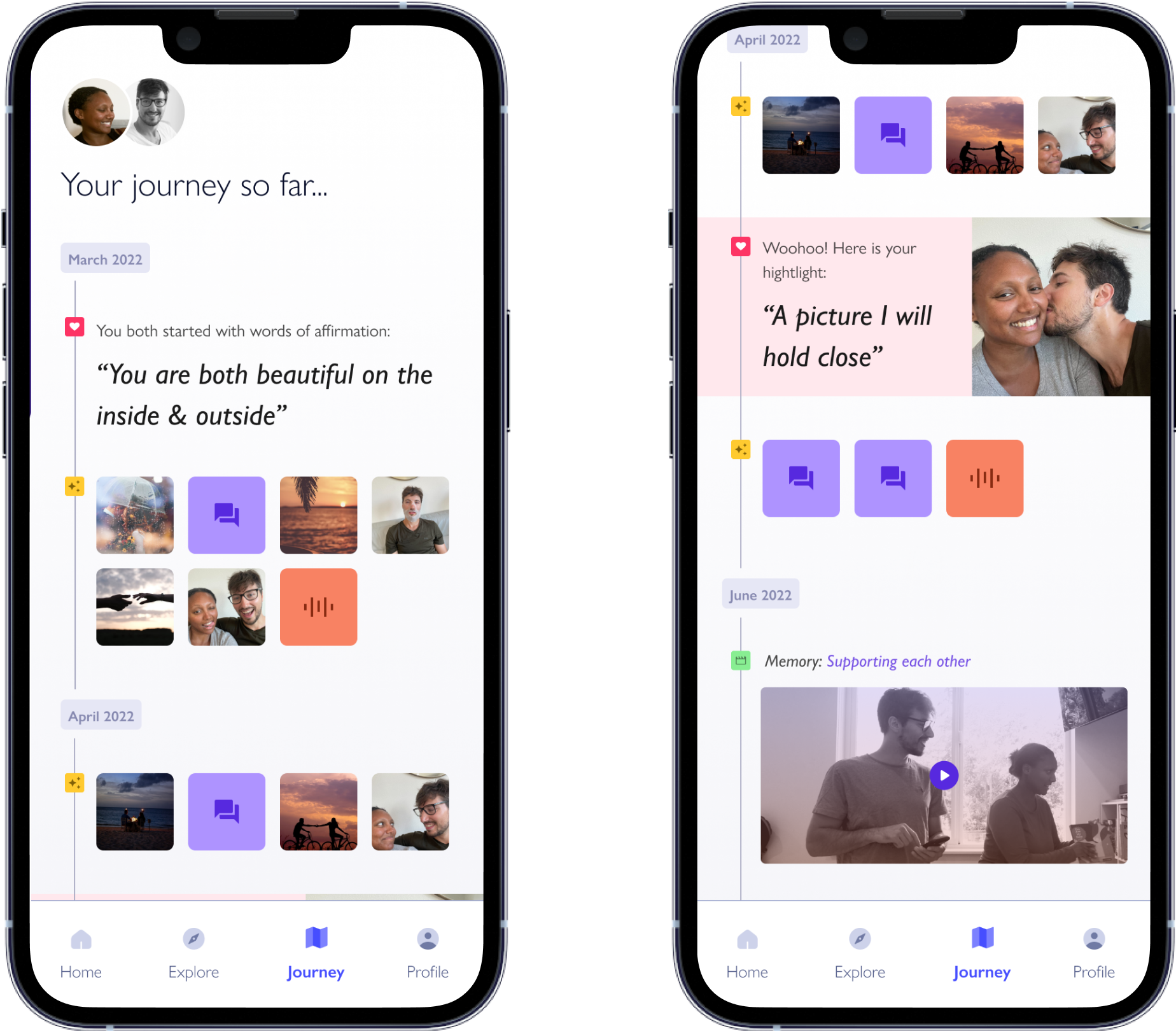
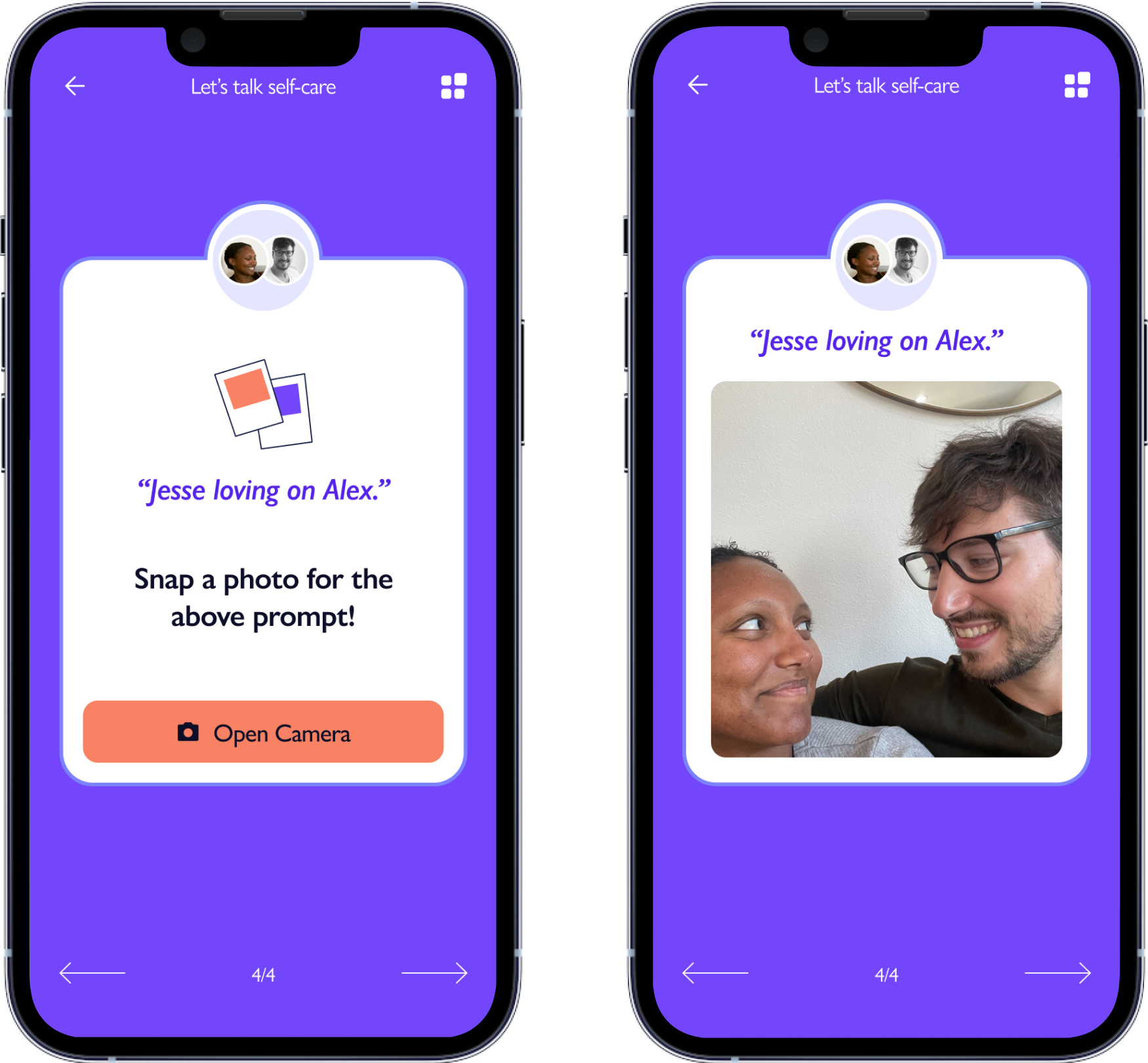
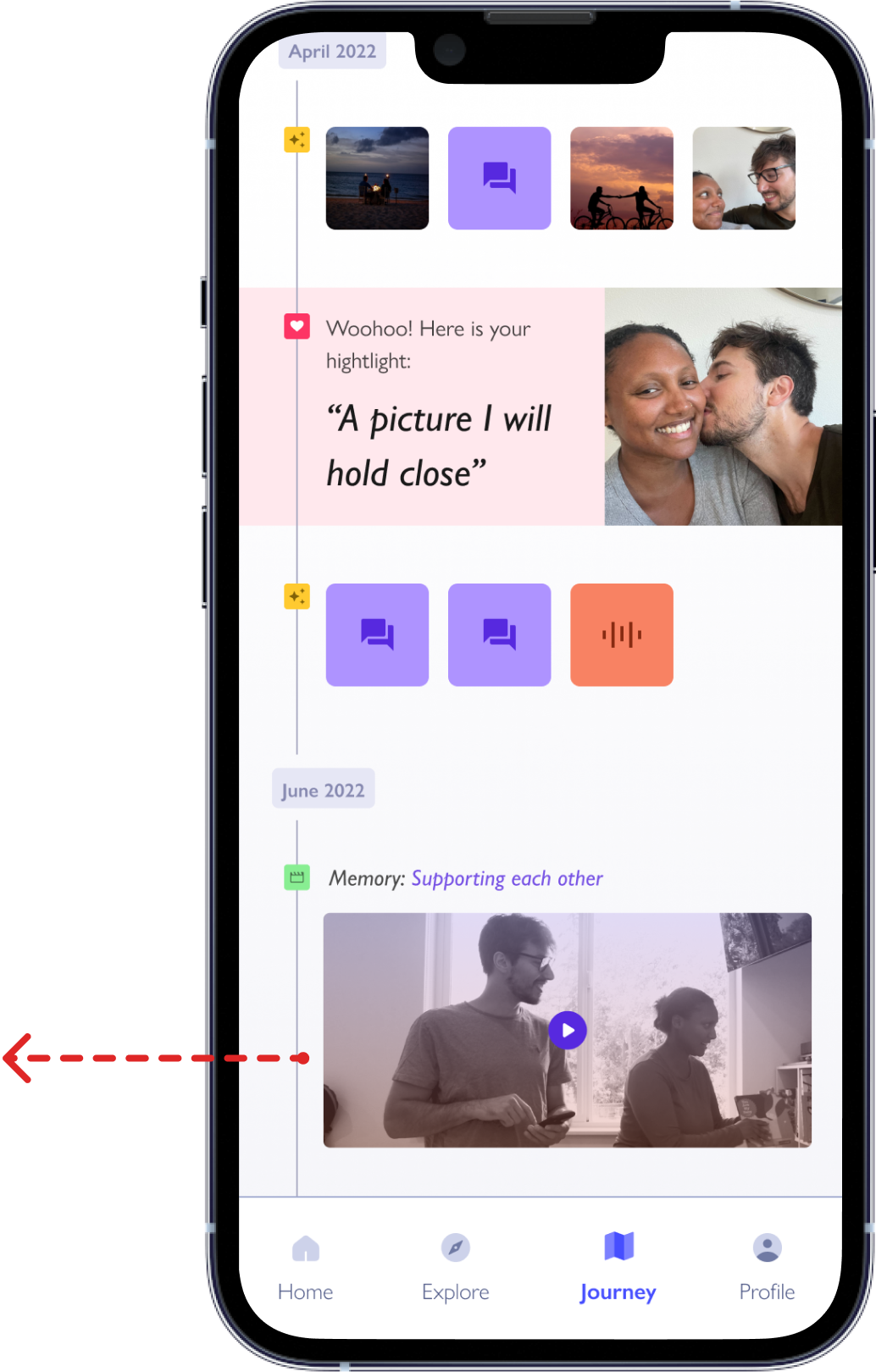
At the end of each conversation, couples are prompted to snap a photo that is logged into their Journey.

This project challenged me to keep my range of ideas broad before narrowing down, and not being afraid to repeat this process multiple times and pivot directions. There were several concepts that my teammates and I talked-to-death about and built out but ultimately decided to drop because we were not satisfied with the solution. One thing that was crucial to our team in making decisions was our unified goal of keeping our user’s needs at the forefront of every design decision. Defending or letting go of our design decisions to build in our app was an easier process when we had the same goal in mind.